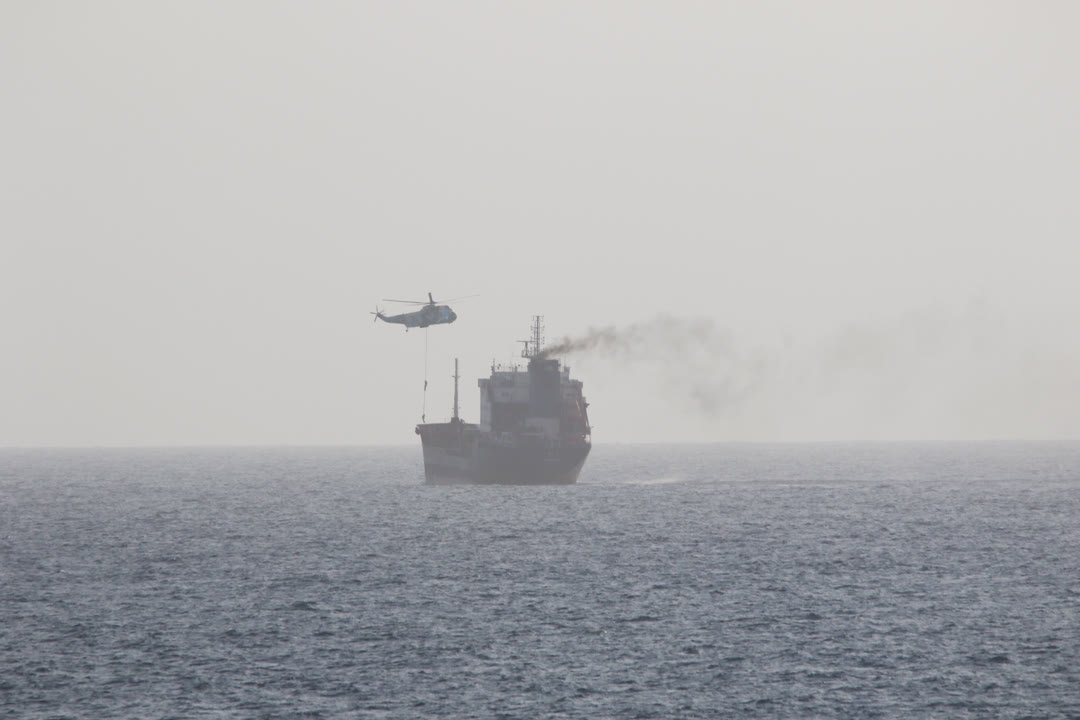
The United Kingdom Maritime Trade Operations (UKMTO) said a tanker sailing outbound through the Strait of Hormuz was hit on its stern by an unidentified projectile about 11 nautical miles north of Khasab, Oman, early on Saturday.
In a second warning, the agency said that about 50 minutes later another incident was reported in the same area, with an unidentified projectile striking a tanker’s engine room about 17 nautical miles east of Khasab. It was not immediately clear whether the two warnings concerned the same vessel or two separate tankers.
No casualties were reported in either incident, and the environmental impact remained unknown. The tankers’ identities, flags and cargoes were not disclosed, and no party has claimed responsibility for the attacks. Authorities are investigating, and vessels have been advised to transit the area with caution and report any suspicious activity.
The two incidents came a day after another tanker was struck by an unidentified projectile about eight nautical miles north of Khasab and caught fire.
Background: The Strait of Hormuz has repeatedly seen attacks on tankers and commercial shipping in recent weeks, and the strategic waterway remains the central arena of the naval confrontation between the United States and its allies and the Islamic Republic. Repeated attacks on commercial shipping at the strait’s exit keep the risk high on the world’s most important energy transit route.
Analysis: The pattern of scattered attacks on tankers around Khasab and the exit of the Strait of Hormuz shows that the regime, the central threat to maritime security in the region, is trying to raise the cost of the naval blockade and of US and Israeli military pressure by keeping the waterway unsafe. The tactic has so far backfired: the US and allied military presence in the Persian Gulf has been reinforced, the blockade of the regime’s ports continues, and the Strait of Hormuz remains the main pressure point on the Islamic Republic. Shipping in this region will not be secure until the regime abandons its aggressive maritime conduct.
Source: Reuters