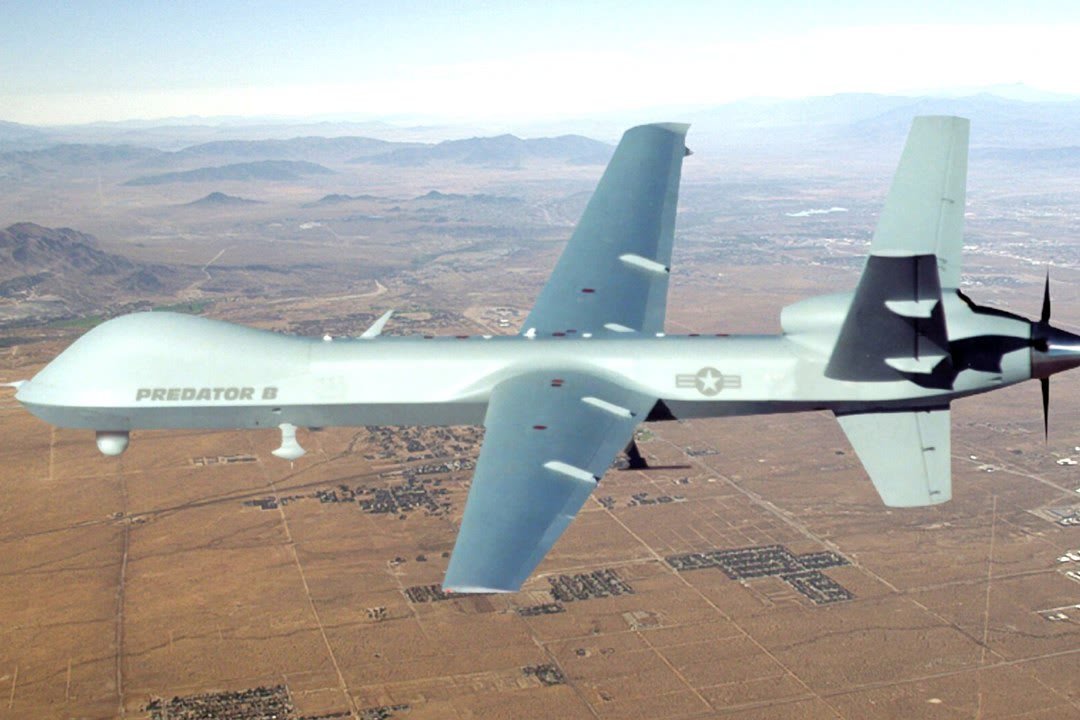
The public relations office of the Islamic Republic’s army announced early on Sunday that at 3:30 a.m. local time a US drone struck a boat near the town of Sirik in Hormozgan province. In its statement, the army presented the vessel as a fishing boat.
According to the statement, the boat carried three people and belonged to a man named Mahmoud Alofteh. Two of those on board were found and taken to hospital in Sirik, but the boat’s owner has not been found and a search operation to locate him is continuing.
In practice, however, these vessels are not fishing boats. They are the regime’s decoy boats, moving through southern waters under fishing cover while carrying out surveillance missions. Because the Islamic Republic has no radar system in this area, it uses these very boats for surveillance operations, watching ships as they pass so that they can be targeted.
Sirik lies on the southern coast, east of the Strait of Hormuz, an area that in recent months, amid the US naval blockade of the Islamic Republic’s ports, has repeatedly been the scene of reported maritime confrontations and incidents.
At the time of writing, the US military had issued no response to the claim, and no American official had confirmed any drone strike on this boat.
Background: The Islamic Republic army’s claim of a US drone strike on this boat has no independent confirmation; no independent imagery from the scene has been published, the American side has not confirmed it, and no independent international maritime body has recorded such an attack. Presenting this vessel as a fishing boat is itself part of the regime’s standing deception; these boats are the regime’s surveillance and targeting tools under fishing cover, not genuine fishing vessels. What can be documented is the army’s own official statement and the continuing search for the missing crew member, not the attribution of an attack.
Analysis: The army’s immediate release of this claim, at a time when the US naval blockade is placing the regime’s maritime traffic east of the Strait of Hormuz under heavy pressure, is part of Tehran’s narrative war to build an image of victimhood in southern waters. The decoy and surveillance boats, in the absence of radar coverage, are among the regime’s few eyes for monitoring passing ships in this area, and their being struck or exposed is itself a sign of the operational pressure the blockade is placing on the regime’s maritime surveillance network. Until Washington or an independent body confirms the event, however, the statement remains a one-sided claim and changes nothing in the regional military balance.