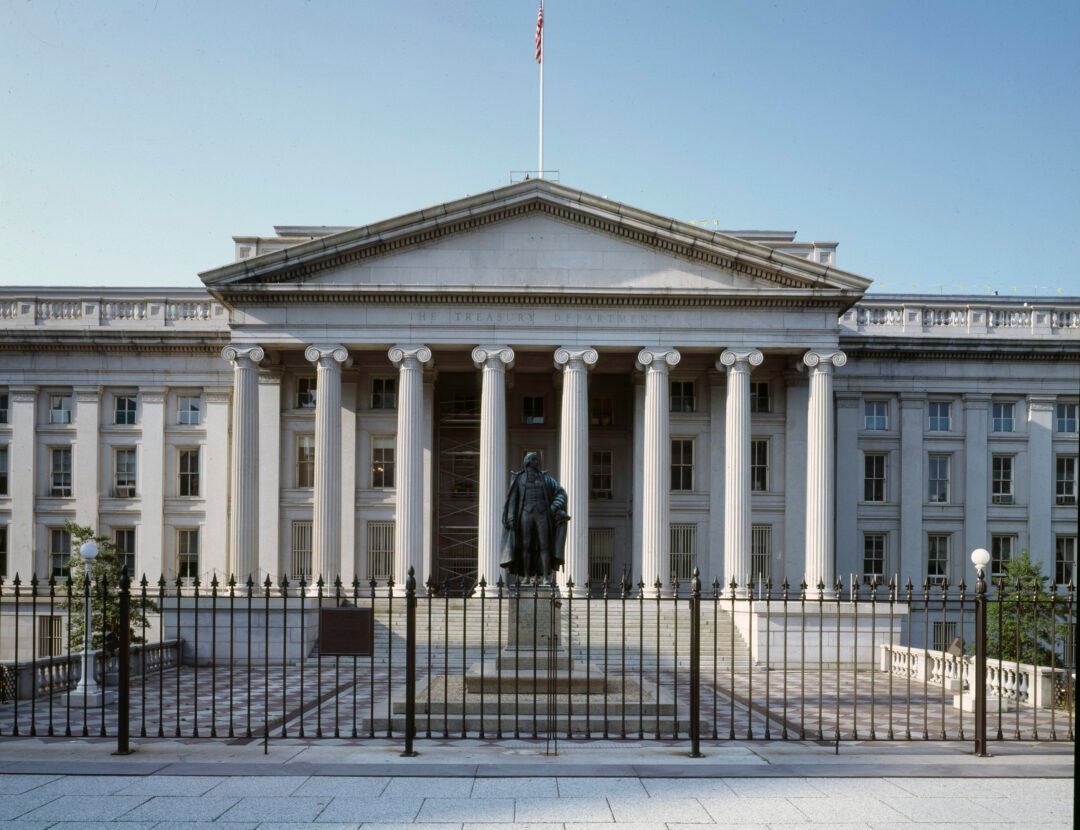
US Treasury Department officials met government authorities in Singapore and Malaysia this week, including regulators and national security bodies, to warn of the potential risks they could face if they do not comply with US sanctions on the Islamic Republic.
Washington is urging both countries, as well as the law firms and banks operating there, to stay alert for Islamic Republic front companies, as it steps up sanctions enforcement in Asia in a bid to bring about a speedy end to the conflict in the Middle East.
A Treasury Department official said the US is urging additional scrutiny of high-risk sectors such as maritime transport, aviation services and procurement networks, to make sure they are not fronting for the Islamic Republic. The official added that Washington will target these lifelines and that doing so will not be a negotiation when a lifeline that needs to be targeted is found.
Since the US and Israel commenced strikes on the Islamic Republic in February, the US has intensified actions to throttle Tehran’s business interests overseas. In August, President Donald Trump’s administration launched a new campaign that resulted in a barrage of sanctions against targets spanning Canadian digital currency platforms to a major Russian banking group.
For years, tankers have regularly made stops in the waters around Malaysia, Singapore and Indonesia to make ship-to-ship transfers of Islamic Republic oil that help obscure its origin. Last year, Malaysian authorities said they would more tightly enforce rules around these transfers, and in February they seized two tankers and their cargoes.
In July, the Treasury Department sanctioned dozens of individuals, vessels and companies based in Singapore, Hong Kong, the United Arab Emirates, the Marshall Islands and St Kitts and Nevis linked to Islamic Republic oil magnate Mohammad Hossein Shamkhani.
The US official said these efforts were starting to disrupt the Islamic Republic’s sources of revenue, citing data showing the country is currently undergoing the worst GDP contraction in four decades and the highest rate of inflation since World War II.
The official also said an Islamic Republic airline that has recently flown to Malaysia was raised in the meetings, without naming the carrier. Using public flight records, the regularly scheduled Tehran to Kuala Lumpur flight was identified as operated by Iran Airtour, which flew as recently as November 14. A scheduled flight on November 17 did not depart, the records also show.
Most Islamic Republic airlines largely stopped flying to Malaysia in 2022 due to US sanctions on refuelling Iranian planes. Iran Airtour, a privately owned airline, resumed flights to Malaysia in November 2025. On September 8, the US imposed sanctions on dozens of companies in the United Arab Emirates, Britain, Malaysia, Turkey and Kazakhstan it said were supporting the Islamic Republic’s aviation sector to move weapons, personnel and illicit cargo.
Both Malaysia and Singapore implement UN Security Council sanctions on the Islamic Republic. Singapore’s government said in a statement it is firmly committed to doing its part and preventing bad actors from abusing its corporate vehicles, citing its efforts to strengthen vigilance in the maritime and financial industries this year. The Malaysian government did not respond to requests for comment.
Background: The waters around Malaysia and Singapore have for years been a main chokepoint for ship-to-ship transfers of Islamic Republic oil that obscure its origin. The US naval blockade in the Strait of Hormuz, together with pressure on movement over the Islamic Republic’s land borders and through the Caspian Sea, has extended sanctions enforcement to Southeast Asia.
Analysis: A direct Treasury warning to two of Asia’s financial and maritime hubs shows maximum pressure is no longer applied only in the Persian Gulf, and that the sanctions evasion lifelines across Asia are now being targeted. The Islamic Republic is the central threat in this equation, and the more its front company networks and covert oil transfers are identified and blocked, the less capacity the regime will have to finance its war and its proxy networks.
Source: Reuters