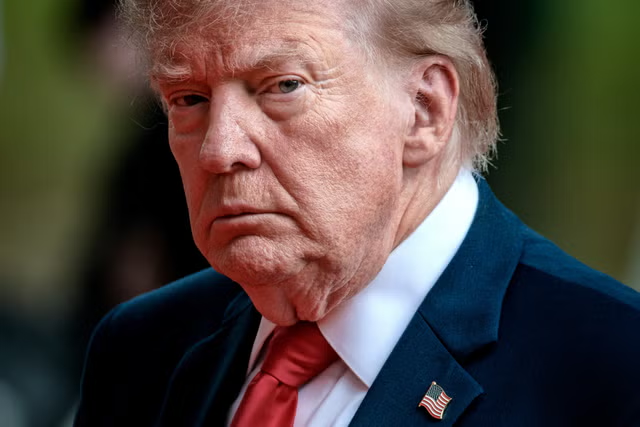
In Tehran, the seat of leadership and command finds a new occupant sooner than is imagined in Washington. When Ali Khamenei was killed and his son Mojtaba succeeded him, although great ambiguity still surrounds whether Mojtaba is alive, the Islamic Republic revealed two things at once. The highest office of the state was vulnerable to war, and the apparatus that took orders from him was able to submit to another ruler, or even to give power to a name without a physical presence. If Donald Trump decides on war again, he must have an answer for the second part of this experience. The first part has already been seen both by the White House and by the people of Iran: the regime has become weaker.
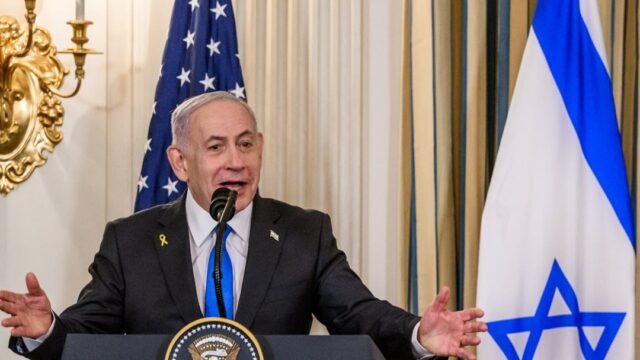
Reuters reported on November 18, citing two informed sources, that Roman Gofman, the head of Mossad, was in Washington consulting on fresh joint strikes with America. This report lays bare Israel’s desire. It provides no document showing that Trump has approved the elimination of senior Islamic Republic officials; Israel Hayom, however, says Trump is seeking to eliminate the regime’s senior officials. The distance between these two propositions is the site of a serious dispute over the aim of the war. Israel can ask Washington for partnership in launching an operation, but the President of the United States must be able to answer a harder question: on the day the operation ends, what can the government in Tehran no longer do that it can do today? By answering the second question, Trump aligns public opinion with the war in this way. Trump constantly speaks of the regime’s nuclear danger and of the decision of the regime’s senior officials to build an atomic bomb. (Reuters report)
Khamenei’s Successor and the Lesson of the Last War
The transfer of power from father to son, for a government that came to power with the promise of abolishing hereditary rule, carries a meaning beyond history’s irony. In the moment of danger, preserving the consensus among the holders of power became so important that they accepted the political cost of familial succession, although the ambiguity over Mojtaba being alive persists. For the IRGC, the value of that consensus was that on the day after the leader’s death, commander and subordinate still knew whose signature carried authority. For the people of Iran, that same consensus had another meaning: they are fundamentally not in agreement with the Islamic Republic’s government, and even at one of the most critical moments in the Islamic Republic’s history, the choice of leader remained the monopoly of a circle whose political survival depended on the outcome of the choice.
From here one can judge the elimination of commanders in war. The notion that the death of a leader or commander may be dangerous mainly delays a sensitive decision. That delay matters militarily in the middle of battle. But if his successor takes control of the same budget, enjoys the same immunity and is rewarded for carrying out the same policy, yet in practice they no longer obtain that result, what reason is there for Trump to decide otherwise on eliminating the regime’s leaders? The strategic necessity for Washington is to bring the regime’s command power into the definition of the war’s aim, and to observe the same result it planned for. It is important that the number of officials killed is a misleading measure for gauging the attainment of that aim; what matters is the effectiveness of the officials, whose elimination has a direct impact.
Who Pays for Rebuilding the Regime’s Power?
In assessing war damage, a missile depot can be seen on a satellite image. The decision that tomorrow provides the funds to rebuild that same depot is not seen in the image. This difference is entirely tangible for an Iranian family. Here the question of effectiveness becomes important. When the country’s resources are again spent on the IRGC’s priorities, the cost of a decision they took behind closed doors is paid from the income and means of a people who had no share in taking it; so a decision behind closed doors to eliminate the principal leaders can be effective, not the mid-level officials. Trump must not, on the basis of a policy of piecemeal elimination, take an action in which part of the ruling structure is destroyed and another part is forced into surrender, only for the same war to return after a few years. It must not be overlooked that if the ruling apparatus finds another opportunity, it will transfer its current bill to society and impose its survival through repression. But if the aim is the elimination of the regime’s chain of leaders, there will no longer be the possibility of repression, nor of replacing a government official after an official is eliminated.
The US Congressional Research Service, in its September assessment, examined the continuation of periodic strikes and the escalation of operations alongside a ceasefire and a negotiated agreement. For gauging these options, one practical question is more useful than the vague phrase “weakening the regime.” If, six months after the fighting stops, the IRGC can again allocate the country’s resources to the same military commitments and decide on resuming the crisis, what exactly has Washington gained? Buying six months of time is sometimes worth it. Its value depends on what is done in that interval and on who gains the authority for the next decision; but the regime’s return to the previous system nullifies all the desired results. (Congressional assessment)
The Line Between the Regime’s Defeat and Iran’s Victory
In the Persian Gulf, a government that must supply drinking water to its cities does not measure America’s success by the number of changes at the top of the IRGC. What matters to that government is how far a political crisis in Tehran can disrupt the daily lives of its citizens, and their ultimate goal is the removal of the shadow of threat. Inside Iran, too, the measure is clear: does the lessening of the Islamic Republic’s power give Iranians more possibility to choose their own demand, to decide over the country’s resources and to hold the government to account? A regime may retreat on the battlefield and still hold the upper hand in its prisons and courts; so for the neighbouring countries and the people of Iran, what matters is the overthrow of this regime, not its periodic weakening.
To prove America’s ability to deliver another blow, Trump does not need a new limited war; he needs to finish the job, which is helping the overthrow and collapse of the regime. What still needs to be proven is, first, Washington’s ability to convert military superiority into a lasting constraint on the Islamic Republic’s power to wage war, and second, the complete destruction of a threat called the Islamic Republic. If, after the war, the next commander can still decide in the name of the government and the regime’s structure and impose its cost on the people, history will not remember that period by the name of the commander who was killed. What will be remembered is the great authority that passed to his successor; so if Trump wants to make history, he must fully operationalize the plan to eliminate the regime’s officials, and in this path the Netanyahu government, and Israel as a whole, can bring about the desired result. Trump’s plan to eliminate the regime’s leaders is not a wrong plan; it is the only way to end terrorism in the region.
Morteza Esmailpour is an analyst and researcher of political science and strategic affairs.