The Islamic Republic’s embassy in South Africa threatened two US Navy officers online with the message “We will find you,” as their warship returned to San Diego on Friday after a historic 357-day deployment that included combat against the Islamic Republic’s forces.
The warning, published on November 13 on X alongside images identifying the commanding officer and executive officer of USS Spruance, prompted a regional expert to warn that the Islamic Republic’s public targeting of members of the US armed forces should set off alarm bells in Washington.
The embassy identified Capt. Lee R. Tate, Spruance’s commanding officer, and Lt. Cmdr. Jeffrey A. York, the ship’s executive officer.
“We will find you,” the embassy wrote on X.
The embassy had previously, in a March 28 post, accused the officers of ordering the firing of Tomahawk missiles that killed 168 children at an elementary school in Minab, Iran.
The earlier post began: “Remember these two criminals.” The embassy at the time asked: “Do they not have children of their own?”
Behnam Ben Taleblu, a senior fellow at the Foundation for Defense of Democracies, warned that Tehran’s rhetoric should be taken seriously given the Islamic Republic’s record of plotting attacks against US officials.
“This should set off alarm bells in Washington, at the White House, the Pentagon and even within CENTCOM,” Taleblu told Fox News Digital. “The Islamic Republic has literally identified personnel it claims were involved in strikes against the regime and is talking about retaliation.”
“If there really is a plot to target these individuals, it is vital that they be identified, disrupted and defeated,” Taleblu warned.
The Islamic Republic’s threat came a day after President Donald Trump warned Tehran over assassinating senior US officials.
During a November 12 interview with radio host Hugh Hewitt, Trump was asked what would happen if the Islamic Republic killed a senior US official.
“They won’t be around for long, anymore,” Trump replied.
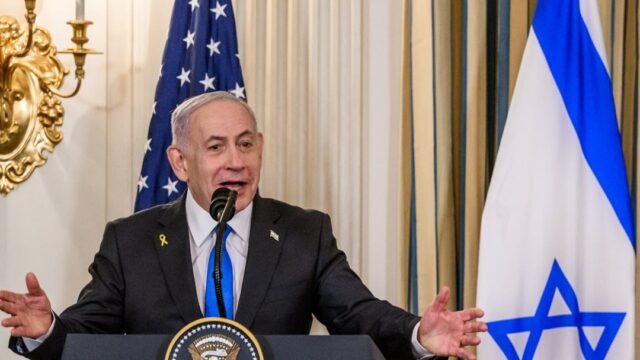
His warning also followed reports that Treasury Secretary Scott Bessent had moved from his residence in the Washington area to a military base amid Islamic Republic threats against his life.
Bessent confirmed the move during an interview on Friday on CNBC and said he was following Secret Service protocols.
“Why should I be afraid when brave military personnel in the Persian Gulf and President Trump constantly receive death threats?” Bessent asked.
Bessent described the Islamic Republic as behaving “like a dangerous cornered animal” and insisted the threats would not derail the administration’s economic pressure campaign against Tehran.
Secretary of State Marco Rubio, Defense Secretary Pete Hegseth and senior White House official Stephen Miller have also reportedly moved to military housing or other protected housing amid security concerns.
In another post on X, the Islamic Republic’s embassy in South Africa mocked senior administration officials over their security arrangements.
“Rubio, Bessent, Hegseth and other US officials live in constant fear, haunted by the crimes they have committed, and are now confined in military bunkers for their own protection,” the embassy wrote, and suggested they sometimes appear in public.
The threats come as federal officials have announced developments in alleged Islamic Republic-backed plots against Americans.
On November 10, the FBI added Shahram Poursafi, an operative of the Islamic Revolutionary Guard Corps, to its most wanted terrorists list over an alleged assassination plot against former senior US officials, including former national security adviser John Bolton.
The same day, the Justice Department announced terrorism charges against three men accused of involvement in nearly 20 attacks and attempted attacks across Europe and the United States, including an alleged plot to target a British air base that hosts US forces.
These developments followed an October 23 US intelligence warning that Islamic Republic efforts to target US personnel abroad had increased significantly and that some plots had reached advanced stages.
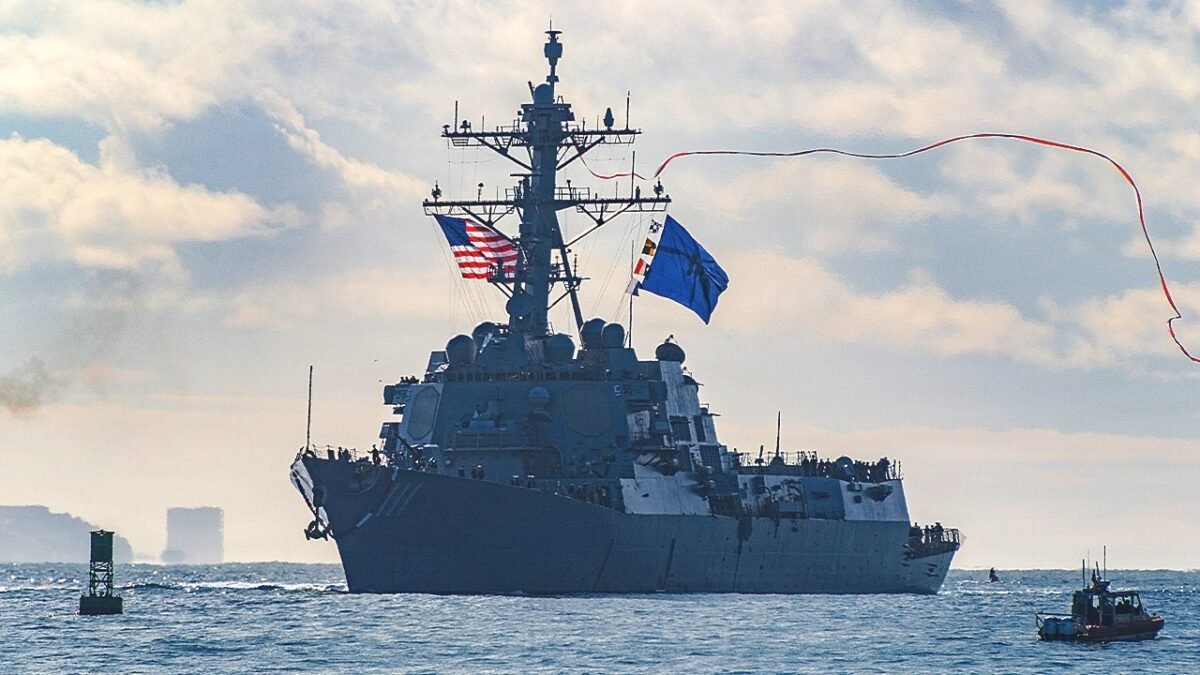
The embassy’s warning coincided with Spruance’s return to Naval Base San Diego on November 13, ending the longest deployment by a US Navy destroyer since World War II.
The Arleigh Burke-class guided-missile destroyer left San Diego on November 21, 2025, alongside the USS Abraham Lincoln Carrier Strike Group. Its deployment was extended while US forces were conducting Operation “Epic Fury” against Iran.
According to a statement released by the Navy, Spruance sailed more than 88,000 nautical miles during the deployment and fired dozens of Tomahawk land-attack cruise missiles against Islamic Republic military targets between February and August 2026.
The ship also destroyed 12 uncrewed aerial vehicles and four anti-ship cruise missiles while operating under constant threats from the Islamic Republic’s drones and missiles.
“Specifically, Spruance, as the alternate air defense commander, I will say, was instrumental in defending the carrier, defending the force against those incoming threats,” Tate said in the statement on Friday.
The destroyer also took part in the US blockade of Iran’s ports. In April, it intercepted the Iranian-flagged cargo ship Touska after the ship failed to heed repeated US warnings.
US Central Command said at the time that Spruance ordered the ship’s engine room evacuated before firing shots that disabled the vessel.
Tate called commanding the ship during its extended deployment “the honor of a lifetime.”
“The sailors of Spruance made a difference. They represented their families, their ship and the United States Navy with pride,” Tate also said in a statement on Friday.
Meanwhile, Islamic Republic officials have also threatened US military installations abroad.
On November 11, Mohsen Rezaei, secretary of the Islamic Republic’s Supreme National Security Council, warned that Tehran could attack US bases in Europe if US strikes on Iran resume.
“If the Americans make a mistake and attack us, we will not limit ourselves to the nearby bases,” Rezaei told Al Mayadeen.
Taleblu described the embassy’s recent statements as part of an escalating pattern of threats against US personnel.
“This escalation is a trajectory we have been on,” he said, pointing to threatening rhetoric from the Islamic Republic’s diplomatic accounts and hardline commentators during and after the war.
“So this is basically taunting and trash talk from the world’s leading state sponsor of terrorism; one that unfortunately has a record of doing these things, even with a delay,” he said.
He pointed to threats against US military personnel after the accidental US downing of an Iranian civilian airliner in 1988.
“Something like this is not unprecedented in the 47-year shadow war between the Islamic Republic and America,” Taleblu said, and warned that the conflict has increasingly moved from covert operations to open war and escalating public threats on social media.
Fox News Digital has reached out to the Pentagon and the White House for comment.
Background: USS Spruance is an Arleigh Burke-class guided-missile destroyer equipped with the Aegis combat system; the system that makes these destroyers the air and missile defense shield of the US fleet. Spruance spent months on the front line in the Persian Gulf and the Strait of Hormuz in the recent war, and its commanders’ names are now on the Islamic Republic’s public threat list; publicly targeting and naming officers of a foreign military is a provocative and rare step in the language of threats between states.
Analysis: Naming two serving officers and threatening them in public moves the Islamic Republic’s intimidation doctrine from states to persons. The threat costs Tehran nothing, which is the point: it is meant to raise the psychological price of every future American deployment and to reach into sailors’ families. But it cuts the other way as well. Published a day after President Trump’s warning over assassinations of senior US officials, the post is now a public, documented exhibit in Washington’s file on the regime’s threats, evidence, not leverage. The contrast needs no embellishment: one side demonstrated its capability at sea; the other posts its threats from an embassy in South Africa.