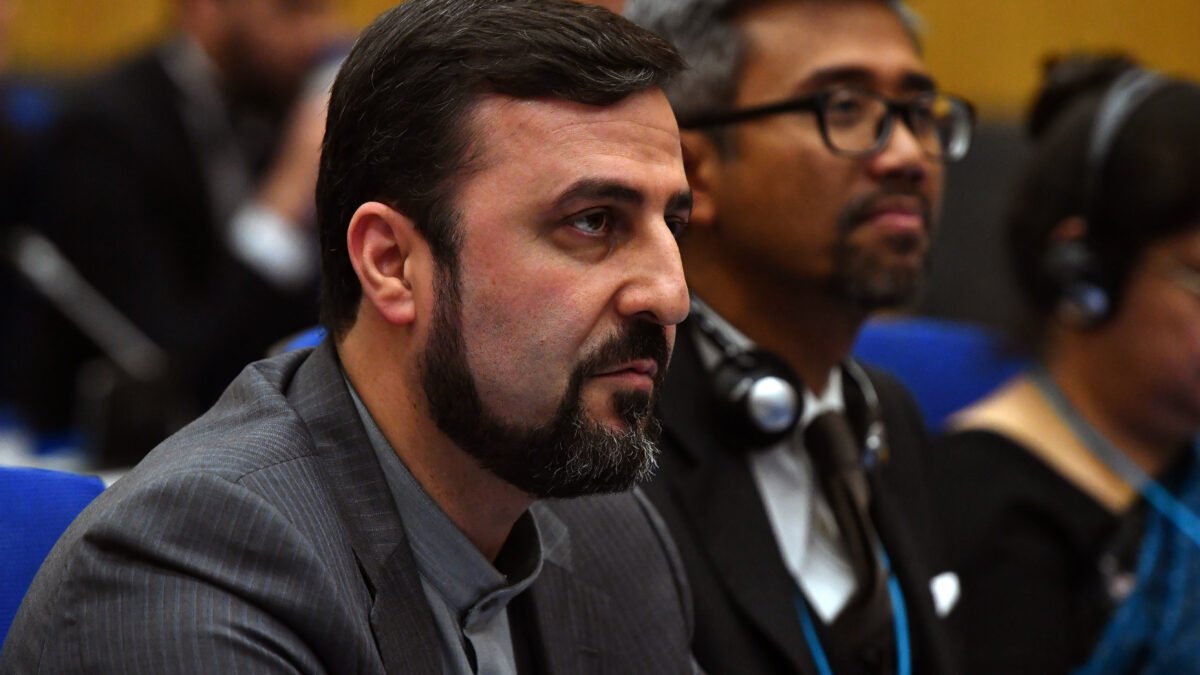
Kazem Gharibabadi, the Islamic Republic’s deputy foreign minister for legal and international affairs, said in a televised interview on Sunday that Tehran “will not wait for the US to attack first,” suggesting that Washington “may be seeking to buy time by abusing diplomacy, in order to prepare the ground for another attack.”
Gharibabadi said the regime is prepared for three scenarios: diplomacy, an economic blockade, or military action. He added that the Revolutionary Guard is building missiles with “new ranges” and that nuclear inspectors will not be admitted until Tehran’s conditions are met and the war is permanently ended. Parliament Speaker Mohammad Bagher Ghalibaf separately told Al Jazeera that the Strait of Hormuz would “never return” to its prior status.
The threats came on the day a US official told Al Jazeera that the aircraft carrier USS Theodore Roosevelt had entered US Central Command’s area of operations — the third US carrier strike group in the region, expected to relieve one of the two already deployed.
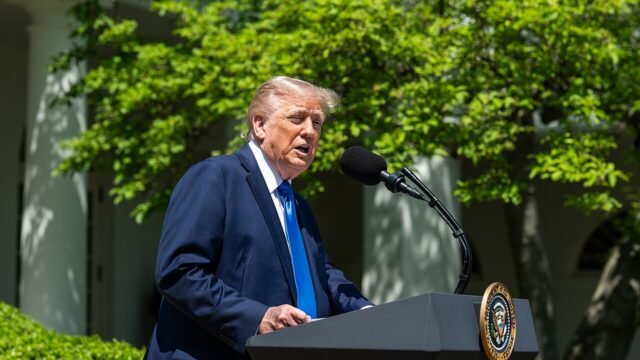
Washington’s position is on the record: last Thursday, President Donald Trump said, “We don’t need a deal with Iran. We’ve got their money, and we’ve got their Strait,” and the naval blockade of the regime’s ports remains in force. In Manila today, the president also warned that any attack on Washington would be answered with a price no country has ever paid before.
Background: Kazem Gharibabadi is the Islamic Republic’s deputy foreign minister for legal and international affairs and previously served as its ambassador to the International Atomic Energy Agency in Vienna. Statements of this kind are typically used by regime officials to deter the other side and for domestic consumption, and do not by themselves amount to a confirmed decision to attack.
Analysis: The “first strike” threat comes from a regime whose drones have been intercepted three times in a row over Bahrain and whose Hormuz narratives keep failing independent verification. A Tehran that sits under a naval blockade, facing three US carrier strike groups, is not speaking from strength; it is speaking from fear — fear that Washington’s diplomatic pause is the preparation for the next attack. That fear is the clearest measure of the pressure campaign’s effect: the regime sees time working against it and threatens preemption to deter Washington’s next move, while the decision to strike or not still rests in Washington, not in Tehran.