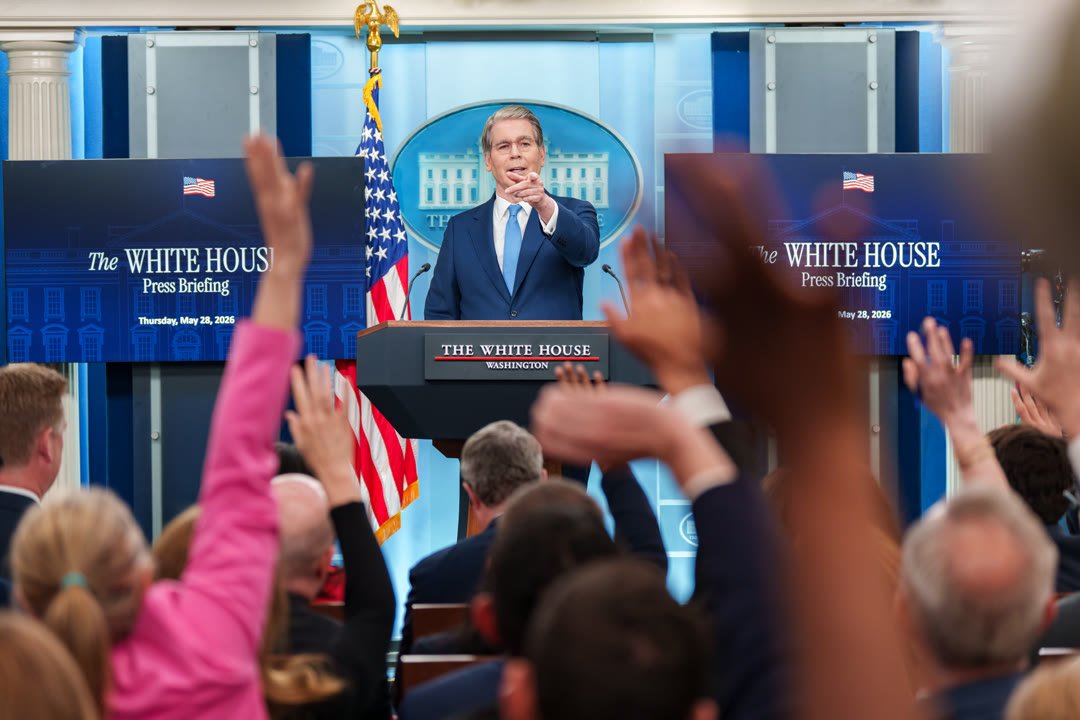
Treasury Secretary Scott Bessent said on Monday, November 23, 2026, in Washington that Iran’s economy is underwater and its leaders are panicking. His remarks accompanied fresh Office of Foreign Assets Control sanctions on more than two dozen Iranian exchange houses, overseas front companies and financial operatives accused of moving billions of dollars through a global shadow banking network to keep the Islamic Republic connected to international trade.
“Iran’s economy is underwater, and its leaders are panicking,” Bessent wrote in a statement Monday. “Iran’s shadow banking system is the last financial lifeline of a bankrupt regime. Treasury will continue dismantling these illicit networks until we have buried the head of the snake.”
The sanctions targeted financial plumbing spanning Iran, Dubai, Hong Kong and Turkey that officials say enables Tehran to bypass US restrictions, sell oil and petrochemicals, and settle transactions in Russian rubles and Chinese yuan. Among the highest-profile targets were the Iran Center for Exchange of Currency and Gold, Rahbar Bazargani Nesim Baharan Qeshm Company, the rahbar affiliate for Iran’s Bank Sarmayeh, along with three of its senior officials, and two Iran-based currency dealers, Mina Fashki and Partners Exchange Company and Mellat Exchange Company, alongside five of their owners and officials. Ten exchange house front companies across the United Arab Emirates, Turkey and Hong Kong were also designated.
In a parallel action, Treasury’s Financial Crimes Enforcement Network published a report finding that nearly $15 billion had moved through potential Iranian shadow banking networks since January 2025. At least $2.6 billion originated from banks in China, $981 million from Singapore-based banks and $922 million from UK-based banks, routed to financial institutions based in the United Arab Emirates.
“Financial institutions are often the first line of defense in denying Iranian regime-linked funds access to the US economy,” Bessent said in a statement on the report. “Treasury will continue to sever the financial lifelines on which the regime relies to fund its military, weapons programs, and terror proxies.”
Background: Monday’s designations mark the latest escalation under Operation Economic Outcast, the maximum financial pressure campaign Bessent launched on August 24 to cut off the regime’s remaining revenue streams and heighten secondary sanctions risks for foreign banks and brokers that continue doing business with Tehran. Treasury says the shadow banking apparatus is overseen by the Central Bank of Iran and relies on domestic currency exchange houses paired with bank-affiliated rahbar companies that manage sanctions-evasion networks through thousands of foreign shell firms. The FinCEN report highlighted transactions that occurred before the launch of Operation Economic Outcast in late August 2026, which has since upped financial pressure on Tehran.
Explanation: Shadow banking is the backbone of sanctions evasion for the Islamic Republic, because oil sales cannot be turned into usable revenue without offshore exchange houses and front companies. Targeting domestic exchanges, bank-affiliated rahbar companies and settlement channels in Dubai, Hong Kong and Turkey at the same time, while tracing $15 billion in suspicious flows, shows Washington has moved from designating individuals to mapping and severing the regime’s entire financial infrastructure, raising the cost of cooperation for banks in China, Singapore and the United Kingdom as well.
Source: Fox News, New York Post, US Department of the Treasury