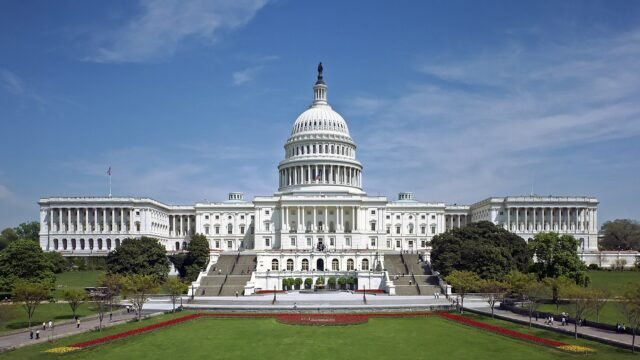
The chair of the Senate Armed Services Committee told Navy Secretary nominee Hung Cao that the White House’s plan to go back to steam catapults on the Ford-class aircraft carriers is a “non-starter.”
Following an exchange between Sen. Tim Kaine (D-Va.) and Cao over President Donald Trump’s preference for steam catapults, Sen. Roger Wicker (R-Miss.) interjected midway through the two-and-a-half-hour hearing on Tuesday: “Secretary Cao, returning to steam is a non-starter, and everybody needs to understand that.”
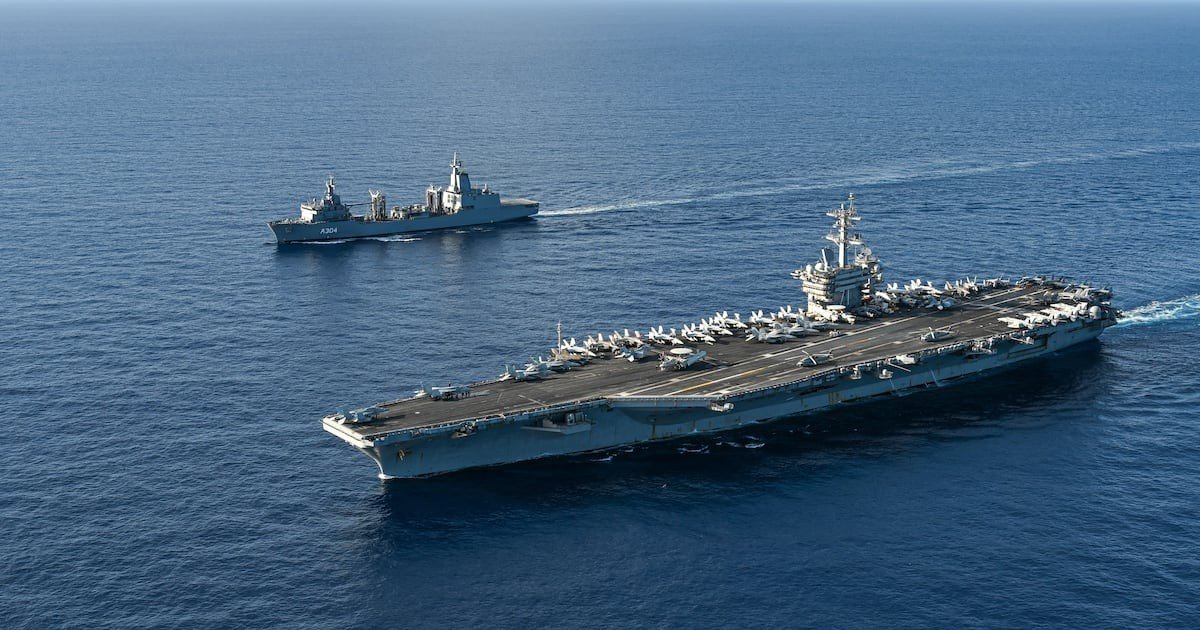
In August, the White House called for the Navy to deliver a plan outlining the cost in time and money to convert the future Ford-class carrier Doris Miller (CVN-81) to a steam catapult system from the General Atomics-built Electromagnetic Aircraft Launch System installed on USS Gerald R. Ford (CVN-78), John F. Kennedy (CVN-79) and Enterprise (CVN-80). Cao delivered the plan last month. Initial estimates for the design work to put steam back into the carrier are around $10 billion.
The August White House memo also tasked the Navy with a plan to purchase auxiliary warships and small surface combatants from foreign shipbuilders to acquire hulls quickly, using a provision of federal law that gives the president broad powers to bypass the domestic-build requirement. Cao defended the move as a way to get ships into the fleet faster. “When you’re looking at Korea, for example, they’re building 230 seagoing vessels this year alone,” he said. “We’re only building less than 20 in our country, and this is a country that’s 99 times smaller than the United States. We should be able to accelerate and move faster.” He added that allowing new entrants to bring their technology and more efficient building methods would create 540,000 jobs in the United States, noting that the Korean frigate Chungnam takes 15 months from keel-laying to launch. The administration used a similar concept, the “Finland model,” to buy icebreakers from Finland and U.S. yards. Congress has not been enthusiastic: both chambers included language in their National Defense Authorization Act drafts to restrict foreign shipbuilding, and the Senate version “closes the presidential waiver loophole.” Sen. Rick Scott (R-Fla.) said during the hearing that the issue is “very important to anybody that cares about our Marines and our sailors.”
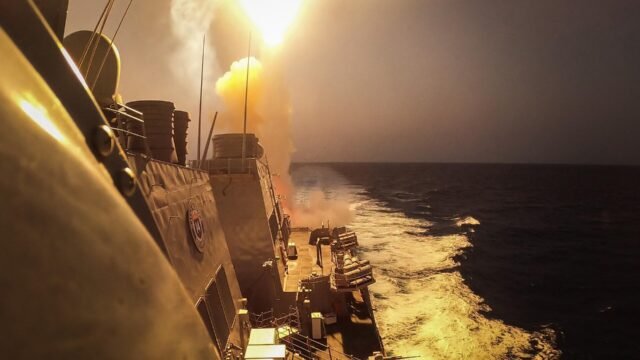
Senators also quizzed Cao on the extended Middle East carrier deployments. Earlier this month, Cao told Navy families in Norfolk that the George H.W. Bush carrier strike group deployment would be close to a year; Gerald R. Ford and USS Abraham Lincoln (CVN-72) likewise deployed for almost a year in support of Middle East operations. Sen. Mark Kelly (D-Ariz.) asked about constituent reports of inadequate food and supplies aboard 5th Fleet ships. Cao said he checks the stores of the more than two dozen ships deployed to U.S. Central Command daily, that the regional standard is at least two weeks of supplies, and that “it’s never gotten to zero, Senator. Not once.” He also called for more unmanned vessels to relieve the ships in the region: “We are trying to accelerate, as well, the unmanned surface vessels in order to relieve the 17 destroyers that are supporting the blockade right now… and ensure that we can reduce the strain on the fleet.”
On transparency, Sen. Mike Rounds (R-S.D.) criticized the Pentagon’s past practice of briefing only Republican lawmakers and sought a pledge from Cao not to limit briefings by political allegiance. Democrats criticized Cao for not notifying Congress of the soft grounding of USS South Dakota (SSN-790) or the relief of its command triad. “My answer is there’s no excuse,” Cao told Kaine. “We will come up with procedures so I can inform you in a timely manner. My thing is I just didn’t want it to be blasted out in Navy Times.”
Following the hearing, Cao’s path to confirmation is unclear. Confirmed in 2025 as the Navy’s number two civilian and acting secretary since April, he needs waivers from both the House and Senate; the Senate process would need 60 votes to break a likely filibuster. A proposal to add the waiver to the Fiscal Year 2027 NDAA is unlikely, Wicker told reporters: “He’s going to have to have a waiver; that’s not the way the NDAA works. You can’t slip it in.”
Background: The electromagnetic launch system is the defining difference between the Ford class and the Nimitz class it replaces, a system built for gentler, more frequent launches and for future aircraft. Redesigning a carrier already under construction for steam would mean years of delay and billions in new costs.
Analysis: The steam-versus-electromagnetic argument looks technical, but underneath it sits America’s industrial capacity: a country building fewer than 20 seagoing vessels a year, eyeing foreign hulls to fill out a 286-ship fleet, is fighting two bottlenecks at once in a long war against the Islamic Republic and a competition with China. Wicker’s intervention settles one point: in the middle of a war, any decision that pushes carriers under construction years further out is indefensible.
Source: USNI News