Hamas said on Sunday that a senior commander who played a role in planning and overseeing the October 7, 2023 attack on Israel was killed in an Israeli airstrike, and the Israeli military also confirmed his death.
The Al-Qassam Brigades, the armed wing of the Palestinian militant group, said Samir Abu Younes, 53, commander of the Rafah Brigade, was killed on Saturday.
The Israeli military said it killed Abu Younes in a strike in the southern Gaza Strip overnight and added that he had commanded the Rafah Brigade since his predecessor, Nael Abu Obeid, was killed on September 15.
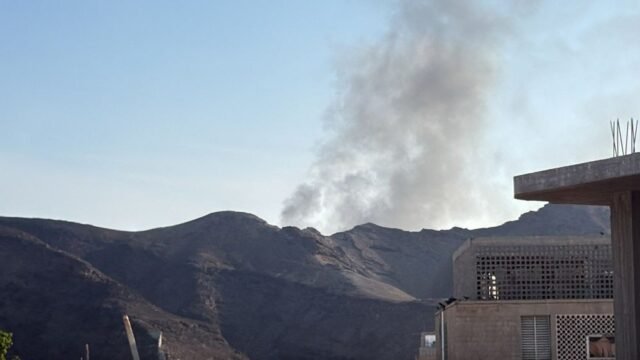
Medics said Abu Younes was killed in an airstrike that targeted him on a street in the Al-Mawasi area of Khan Younis in the southern Gaza Strip, and that others were wounded.
Hamas said Abu Younes joined Hamas’s armed wing in 1991 and held several senior operational roles in Rafah before becoming commander of the brigade.
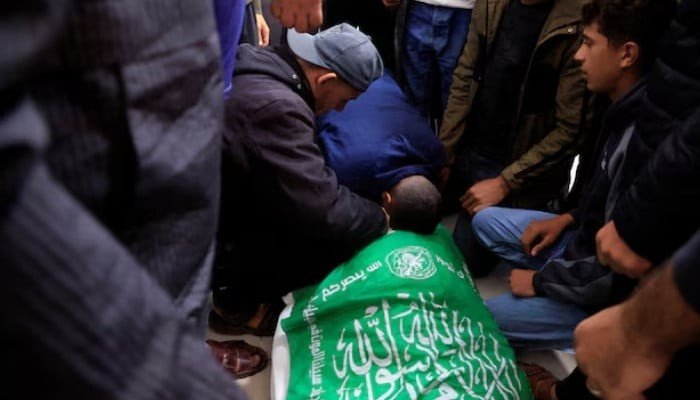
Hamas said his funeral would be held on Sunday afternoon in Khan Younis.
A ceasefire in October 2025 halted major fighting in the Israel-Gaza war, but it has not stopped Israeli strikes and has not guaranteed Hamas’s disarmament.
Gaza health officials say at least 1,600 Palestinians have been killed since the ceasefire took effect, while 5 Israeli soldiers have been killed.
Palestinian officials say more than 74,000 people have been killed in the military campaign that Israel launched against Gaza after Hamas-led fighters killed about 1,200 people in southern Israel in the October 7 attack.
Background: The Izz al-Din al-Qassam Brigades, Hamas’s military wing, have organized their forces into regional brigades, each responsible for one sector of the Gaza Strip, including Rafah at the southernmost point of the enclave. The commanders of these brigades are among Hamas’s most senior military figures, and Israel has pursued their successive elimination throughout the war as part of its strategy to weaken the group’s command structure.
Analysis: Abu Younes took command of the Rafah Brigade on September 15 and was dead within roughly two months. That single interval says most of what there is to say about Hamas’s command structure. Israel’s rolling decapitation of the Qassam brigades does not just remove individuals; it breaks the regeneration cycle, because successors are either inexperienced or killed before they can consolidate. For the Islamic Republic the significance reaches beyond Gaza. Its oldest Palestinian proxy is being dismantled piece by piece, and Tehran — which once used these networks to impose costs on Israel — can no longer protect even their commanders.