The Islamic Republic targeted Bahrain for a second time in three days — the first wave of direct attacks on this Persian Gulf country in several weeks — while again stressing that a path to ending its conflict with the US remains open.
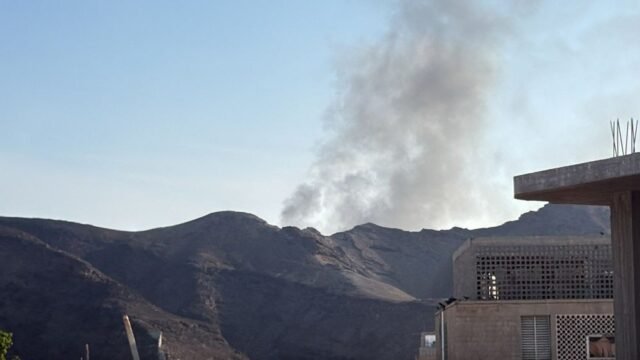
The Islamic Revolutionary Guard Corps said on Sunday that it had fired six drones toward the Al Riffa helicopter base and described the attack as a response to “the blatant aggression of the US military.” The IRGC reported a “successful hit,” while Bahrain said its air defenses had intercepted several aerial attacks by the Islamic Republic and destroyed the projectiles.
According to US Central Command, US forces on Friday shot down two drones fired by the Islamic Republic toward Bahrain. The attacks on Bahrain were the first since early September, when drones of the Islamic Republic were also in pursuit of a US base in the United Arab Emirates. According to Reuters, tensions over shipping in the Strait of Hormuz remain high, while US President Donald Trump has said he is considering delaying an attack on Iran if there are no new provocations.
Although Trump has said he does not see an immediate return to strikes, he has also kept the military option on the table. According to The New York Times on Sunday — citing a US military official who asked not to be named in order to discuss operational matters — the USS Theodore Roosevelt carrier strike group is due to arrive in the region within the next day and join two other aircraft carriers in the Middle East.
Before this year’s operation against Iran, the last time the US had three carrier strike groups in the Middle East was in 2003, when they supported the opening stages of the invasion of Iraq.
An Axios reporter later said the strike group had arrived in the region.
The US has for weeks been planning to deploy this additional aircraft carrier and 10,000 sailors and Marines to the Persian Gulf to strengthen Trump’s hand if he decides after the midterm elections to resume military strikes.
Oil steadied in early trading on Monday after two weeks of declines, as fresh attacks in the Middle East offset signs of a well-supplied physical market. Brent crude held near $96 a barrel after falling more than 2 percent last week, and West Texas Intermediate traded slightly below $89 a barrel.
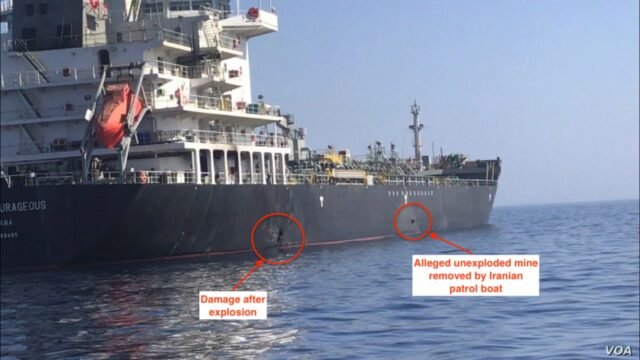
The Islamic Republic’s state broadcaster reported on Sunday that two tankers transiting an unauthorized southern route in the Strait of Hormuz had struck naval mines. The outlet, citing a statement by the IRGC Navy, did not name the ships but described one of them as a supertanker carrying more than 2 million barrels of crude oil.
The Islamic Republic’s state television said on Monday that two tankers had struck mines a few hours earlier while trying to use the southern route through the Strait of Hormuz, bringing the total number of ships that have caught fire in the strait since Sunday to six.
The United Kingdom Maritime Trade Operations said Indian shipping officials had reported an attack on a tanker in the Persian Gulf and that its crew were safe, though the extent of the damage was unclear.
According to the semi-official Fars news agency, Mohammad Bagher Ghalibaf, speaker of the Islamic Republic’s parliament, said on Sunday that the path to ending this conflict — now in its ninth month — is open, if the US accepts the Islamic Republic’s “logical conditions.”
Ghalibaf, who is the Islamic Republic’s chief negotiator in talks with the US, added that Tehran will not remain in a state of “neither war, nor peace” and warned that if Washington resumes attacks, the Islamic Republic’s armed forces “will determine the geography of the battle.”
Abbas Araghchi, the Islamic Republic’s foreign minister, arrived in Islamabad late on Sunday to attend the 30th meeting of the Economic Cooperation Organization. It is unclear whether he will discuss the war with the leaders of Pakistan — which is a key mediator between the US and the Islamic Republic.
The Islamic Republic’s Foreign Ministry spokesman, separately, rejected limits on nuclear enrichment as a way to reach a deal with the US. Esmail Baghaei said at a televised press conference: “We are not at that stage at all, and we have not had and do not have any talks about nuclear details.”
Since the US and Israel began attacks on it in late February, the Islamic Republic has fired thousands of drones and missiles toward US allies in the region — including the United Arab Emirates, Bahrain, Saudi Arabia, Qatar, Kuwait, Jordan, Oman and Iraq.
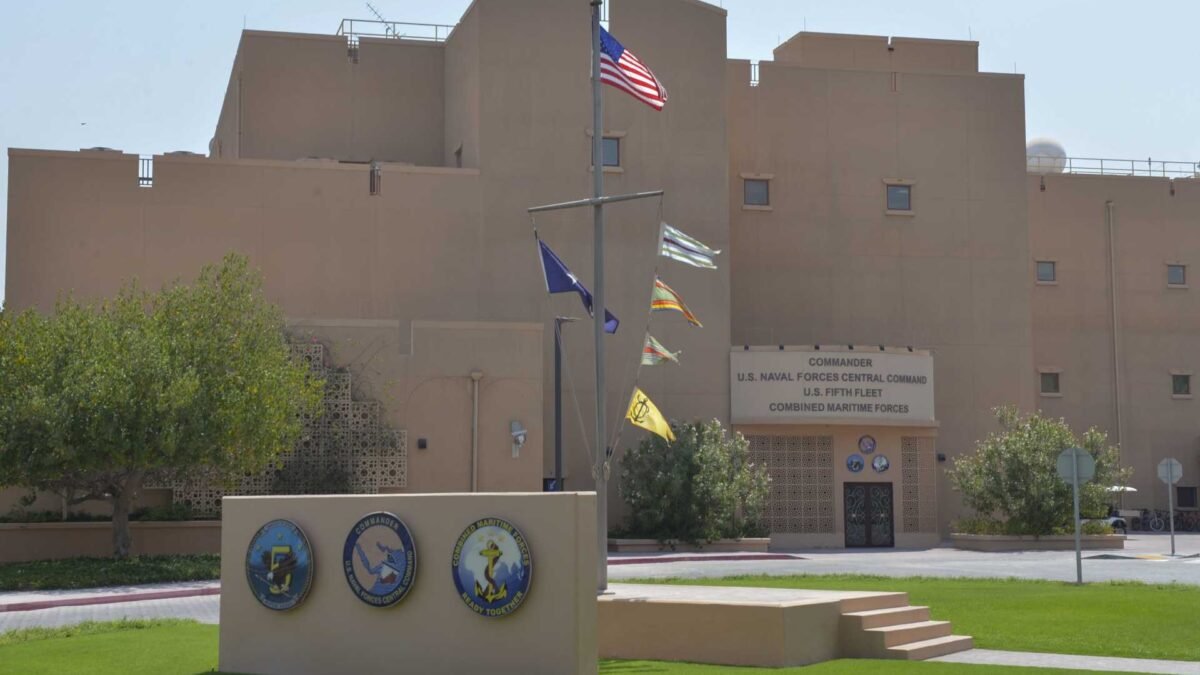
Background: Bahrain hosts the headquarters of the US Navy’s Fifth Fleet and US Naval Forces Central Command, and its naval support facility in Manama is the most important center of US naval operations in the Persian Gulf. For that reason, in any confrontation between Washington and Tehran, Bahrain has been among the Islamic Republic’s first symbolic and operational targets.
Analysis: The drones over Bahrain and the talk of an “open path” to a deal are two halves of the same negotiation, conducted from weakness. Six drones against the Fifth Fleet’s host nation — intercepted, by Manama’s account — buy no military effect; they are a political signal aimed at Arab neighbors and a domestic audience. The real balance is shifting elsewhere: a third American carrier strike group is moving into the region, and with each passing week Washington’s weight of fire grows while Tehran’s drone and missile inventories shrink. A regime that has to launch drones in order to be invited to the table is admitting it has run out of other leverage.