Early Tuesday, Bahrain time, the kingdom’s Interior Ministry sent a mobile alert urging residents to proceed to the nearest safe location, and minutes later blasts were heard over the capital, Manama. The Bahrain Defence Force said its air defense systems identified, intercepted and destroyed several Islamic Republic “aerial attacks” before they reached their targets.
In a statement carried by the regime’s state broadcaster, the Islamic Revolutionary Guard Corps claimed its combat drones had targeted a radar system belonging to US forces at Isa Air Base in southern Bahrain, calling the attack a response to “hostile actions” and to US drones entering Iranian airspace. No damage or injuries were reported in Bahrain, and the US military had not commented on Tuesday’s attack at the time of publication.
It was the regime’s third attack on Bahrain in five days. On Friday, the IRGC claimed it had destroyed a US early-warning radar in Bahrain — a claim US Central Command rejected, saying it had shot down two of the regime’s drones with no damage or injuries. On Sunday, the IRGC said it had launched six drones at a US air defense radar at Riffa Air Base; Bahrain said all were intercepted, and the US ambassador in Manama called the IRGC’s claims of a hit false.
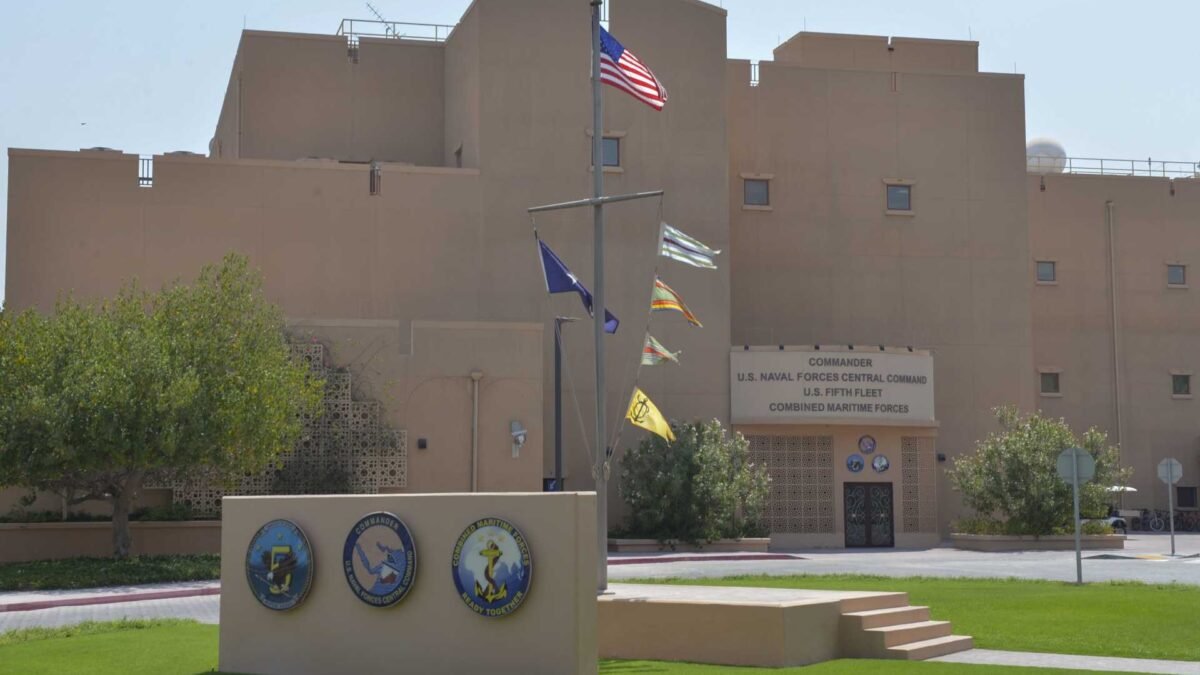
Background: Bahrain hosts the US Navy’s Fifth Fleet and the headquarters of US Naval Forces Central Command, and Isa Air Base is one of the main US air support and surveillance hubs in the Persian Gulf. The early-warning radars stationed in Bahrain are part of the integrated air defense network of the United States and its allies against the regime’s missiles and drones.
Analysis: Under a tightening naval blockade and mounting economic pressure, the regime is repeatedly striking at America’s eyes in the Persian Gulf — its early-warning radars — both to raise the cost of the US presence and to project an image of retaliation at home. The practical result of three consecutive attacks, however, has been complete interception and no confirmed damage: the air defense umbrella of the United States and its Persian Gulf partners is holding, and each new attack pushes the Arab Gulf states a step closer to Washington and deepens Tehran’s isolation. The real danger in this cycle is miscalculation — the day a drone gets through and kills Americans, Washington’s answer will not stop at interception.