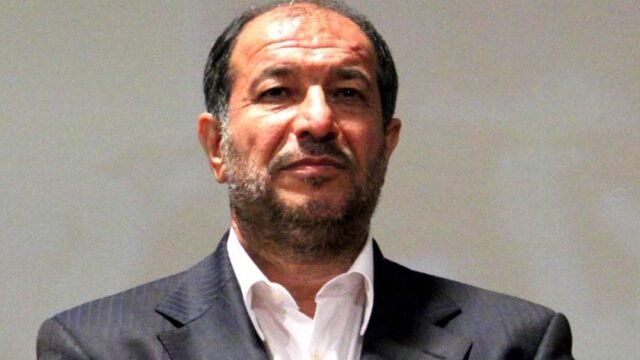
Sadegh Mahsouli, a former Islamic Revolutionary Guard Corps (IRGC) commander and interior minister during the disputed 2009 presidential election, illustrates the movement of military officials into business, government and political organizations.
Background and military career
The Postrevolutionary Iran political handbook archived by Syracuse University records his 1959 birth in Urmia and studies in civil engineering and business administration. PBS FRONTLINE’s August 2009 profile documents his wartime service, command of the Sixth Special Forces Division, IRGC inspection duties and defense ministry planning responsibilities. He also served as governor of Urmia and deputy governor-general of West Azerbaijan.
Wealth and the oil ministry nomination
President Mahmoud Ahmadinejad nominated Mahsouli for the oil ministry in 2005. The Washington Post on November 11, 2005 reported his withdrawal amid questions over his wealth. PBS attributed an estimated $160 million net worth to his statements during the confirmation proceedings and reported business dealings involving oil exchanges with Azerbaijan. This historical estimate is not a current valuation or proof of illicit earnings. Independent financial records would be necessary to establish the origins of his assets and potential conflicts of interest.
Interior Ministry and the 2009 election
Mahsouli succeeded Ali Kordan in November 2008 and served until August 2009. The ministry’s election administration and security responsibilities placed him at the center of the post-election crisis. Holding office alone does not establish personal manipulation of votes.
Human rights violations: Tehran University and Kahrizak
The US Treasury on September 29, 2010 identified Mahsouli as responsible for or complicit in serious human rights abuses, attributing attacks on Tehran University dormitories, torture of students at the Interior Ministry and abuse of Kahrizak detainees to forces under his authority. EU sanctions records likewise cite his authority over police and security personnel.
Amir Javadifar, Mohammad Kamrani and Mohsen Ruholamini were victims of the Kahrizak case. The International Federation for Human Rights in July 2010 documented military court convictions for abuses. Human Rights Watch in January 2018 recorded Saeed Mortazavi’s conviction for complicity in Ruholamini’s murder. These records establish the need to investigate senior officials’ responsibility, but do not establish a criminal conviction of Mahsouli or individual orders from him to kill the victims.
Sanctions and political career
The United States designated Mahsouli on September 29, 2010 under Executive Order 13553, and the EU listed him on October 10, 2011. He served as welfare and social security minister from 2009 to 2011. The OIFI Databook records his appointment as secretary-general of the Paydari Front in 2020. His career demonstrates how former military officials can retain influence beyond their service.
Assessment
The case warrants scrutiny of election oversight, asset transparency and accountability for security force abuses. Administrative sanctions are distinct from criminal convictions. His current position and living status in November 2026 were not independently established.
Hamed Malekpour / Tasnim, 30 December 2014; Wikimedia Commons; CC BY 4.0; thumbnails may be cropped.