
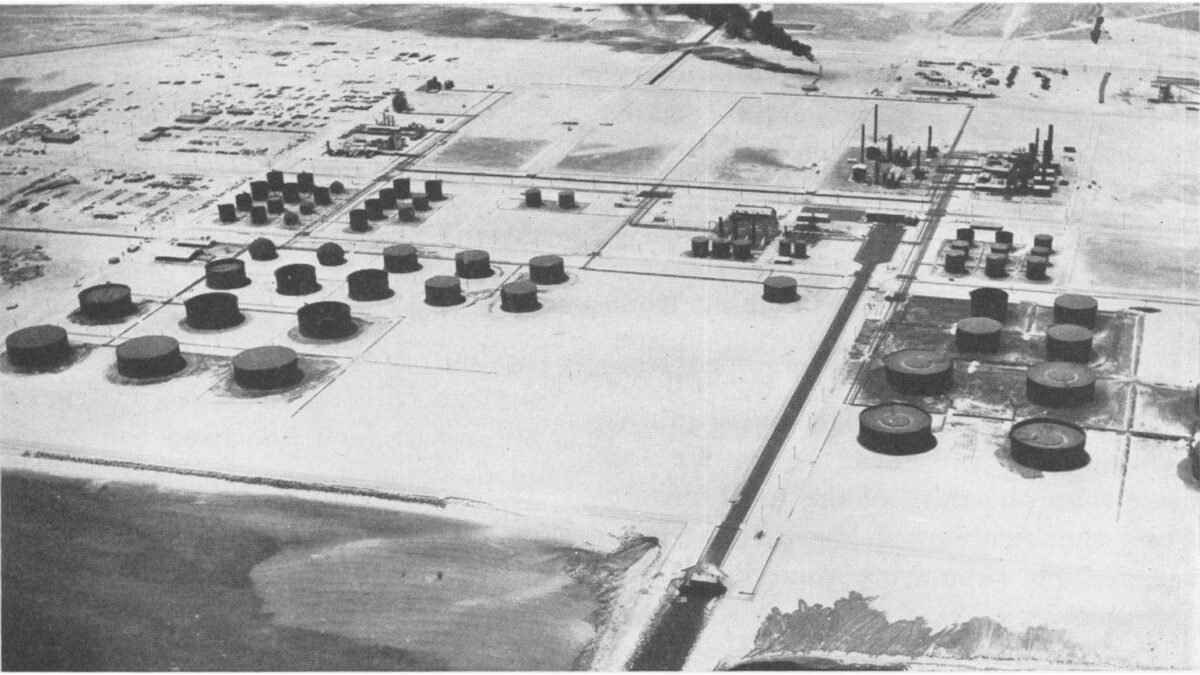
The Houthi military spokesman announced on Tuesday that the group’s forces had carried out two separate military operations against Saudi Arabia’s oil transfer infrastructure. According to the statement, published by Al-Masirah, pumping station No. 9 on the East-West pipeline west of Riyadh was targeted with three drones in the first operation, and pumping station No. 8 on the same pipeline was targeted with two drones in the second, five drones in total across the two operations.
The Houthis claimed precise hits and fires at the targeted facilities. At the time of writing, Saudi officials had issued no official statement on the claim or on any damage, and the hits have not been independently confirmed.
The East-West pipeline carries Saudi crude from the kingdom’s eastern fields to the port of Yanbu on the Red Sea coast, and when passage through the Strait of Hormuz is disrupted it is Saudi Arabia’s most important alternative oil export route. Pumping stations No. 8 and No. 9 have appeared repeatedly on the Houthis’ declared target list in recent weeks, and the latest attack continues that series of operations against the region’s alternative export artery.
Background: The Houthis are a militia based in northern Yemen that receives weapons and training support from the Islamic Republic. In recent months, alongside the war and the naval blockade against the regime, they have intensified drone and missile attacks on Saudi energy infrastructure and on shipping in the Red Sea.
Analysis: The repeated targeting of the East-West pipeline shows the regime’s proxy network trying to put pressure on the only overland route that bypasses the Strait of Hormuz as well, in order to raise the cost of the blockade and of US and allied military pressure. Yet the continuation of these attacks without confirmed strategic damage does more to underline the need to strengthen Saudi air defences and to strike the Houthis’ drone supply chain from the regime than to change the field balance, a chain whose severing would rapidly wear down Tehran’s proxy arm in the south of the peninsula.


