The Trump administration is openly interested in using foreign shipyards to help grow the US Navy. Given the state of our shipbuilding industrial base and the urgency of expanding the fleet, it is not hard to understand why. Our allies have capacity, expertise and production methods worth studying.
But I remain skeptical that building US warships overseas is the right answer. My concern goes beyond the potential impact on American shipyards and workers. I am simply not convinced that the Navy is ready to manage these arrangements successfully.
For years, the Navy has struggled to be a consistent customer. Requirements change, designs are not always mature when construction begins, and decisions take far too long. Those problems have contributed to cost overruns and schedule delays that are now being used to justify looking overseas.
If the Navy has trouble managing ship construction in Virginia, Mississippi, Maine or Wisconsin, why should we expect better results in South Korea or Japan?
Foreign shipyards may offer efficiencies worth embracing, but changing where a ship is built does not fix how the Navy buys it.
The administration has now made its intentions clear. The White House’s August memorandum authorizes a version of the Finland model for selected ship classes that allows initial construction overseas, while requiring foreign partners to create or acquire American shipbuilding capacity and transfer subsequent production to the United States.
That is a significant commitment. But policy language alone will not convince Congress. Foreign companies hoping to participate need to show how they intend to make it happen.
And with Hung Cao, the acting secretary of the Navy, scheduled to appear before the Senate Armed Services Committee on November 17, now is the time to make that argument.
The Finland Model Needs an American Address
The White House approach is inspired by the Coast Guard’s icebreaker cooperation with Finland, where foreign expertise and initial production are intended to accelerate deliveries while expanding US industrial capacity.
The administration’s memorandum goes beyond merely encouraging investment. It requires participating foreign partners to create or acquire a controlling stake in an American shipyard, train American workers, license shipbuilding technology, develop domestic supply chains and build subsequent ships in the United States after the first two vessels.
Those are meaningful conditions. The question is how they will be implemented and enforced.
Which American yards will benefit? How much capital has actually been committed? What jobs and supplier opportunities will be created? When will facilities be ready? And what happens if a foreign partner fails to deliver?
Congress should have those answers before it is asked to support overseas construction.
Hanwha Offers a Useful Example
South Korea’s Hanwha deserves credit for taking meaningful steps in this direction.
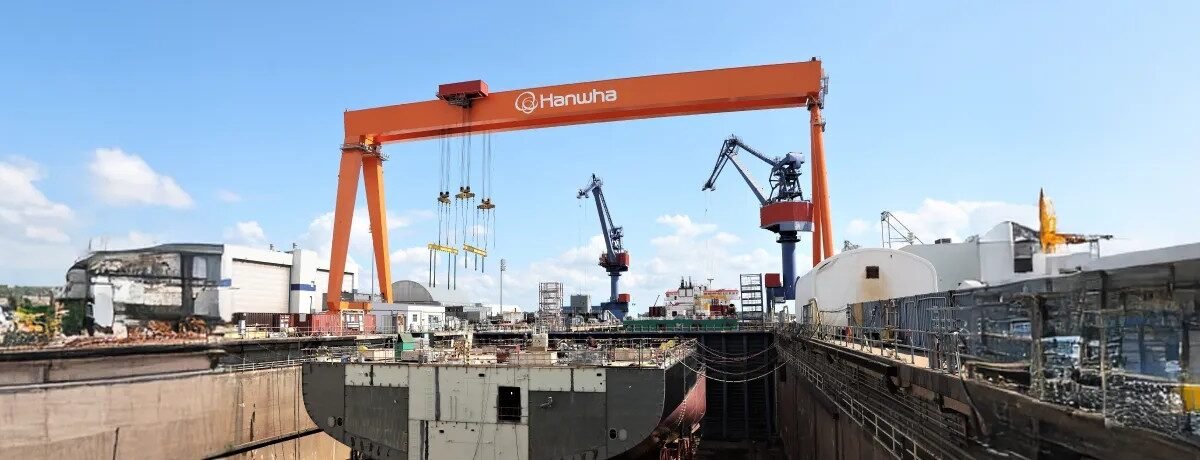
Its 2024 purchase of Philly Shipyard created an American industrial presence. Hanwha subsequently announced plans to invest $5 billion in expanding and modernizing the facility, including new infrastructure, advanced manufacturing capabilities and workforce development.
More recently, Hanwha announced that its US defense subsidiary will take control of the Philadelphia operations, preparing the yard for commercial and Navy work.
That organizational change matters. It suggests Hanwha is acting on its commitment to build an American defense shipbuilding business. Much of the promised investment still needs to be delivered, but the direction is encouraging.
Hanwha is also pursuing Austal USA, whose operations in Mobile, Alabama, support important Navy, Coast Guard and submarine industrial base programs.
That proposed acquisition has become more interesting since it was first announced. Hanwha’s negotiations have advanced, but the American investment firm Wildcat Infrastructure has made a competing bid with a higher indicative valuation. No deal has been completed.
That competition raises legitimate questions about ownership, national security and the future of an important American shipbuilder. But it also shows that established American shipbuilding capacity is attracting serious investment interest.
Hanwha has not earned a free pass. Any acquisition deserves close scrutiny. But the company offers something other foreign shipbuilders should be expected to provide, a concrete strategy for expanding its American industrial presence.
Give American Shipbuilders Credit
There is something else foreign shipbuilders can do that will cost them nothing, publicly acknowledge the value of American shipbuilders.
Much of the current debate has become an exercise in running down the domestic industry. Comparisons with foreign yards often suggest that American companies and workers simply cannot compete.
That is an incomplete narrative of how we got here.
American shipbuilders have largely built the fleet their customer asked them to build, based on the requirements, funding profiles and production schedules that customer set.
The Navy decides what ships it wants, how many it will buy and when it will buy them. Industry has spent decades responding to inconsistent demand, shifting priorities and unpredictable budgets.
That does not absolve shipbuilders of responsibility for poor performance. There are real problems in American yards that industry needs to acknowledge and fix. But government decisions have played a significant role in creating today’s challenges.
And consider what American shipbuilders still produce: nuclear-powered aircraft carriers and submarines, complex surface combatants, amphibious ships and some of the most demanding repair, maintenance and modernization work in the world.
That is an extraordinary industrial capability.
Foreign companies hoping to enter this market would do themselves a favor by publicly acknowledging those achievements and explaining how their expertise can complement American capabilities.
Navy leaders and the administration should make the same point. We will not rebuild confidence in American shipbuilding by constantly belittling the people and companies that do the work.
The Navy Also Has Work to Do
The Navy also owes Congress a credible explanation of how it intends to manage overseas construction.
Building warships overseas introduces complexities including security requirements, technology transfer, international supply chains, quality assurance and configuration management. Each creates additional demands on an acquisition system already under significant strain.
The White House has recognized part of this problem by calling for stricter design discipline, including senior-level approval of changes to foreign-derived parent designs.
That is a useful step, but execution will matter more than another directive.
Who will oversee construction? How will the Navy maintain configuration control? What happens when requirements change or problems emerge during production? And how will it ensure that foreign construction does not create new sustainment challenges when the ships enter service?
These are not reasons to reject every foreign proposal. They are reasons to insist on a serious management plan before committing taxpayer dollars.
Foreign shipyards cannot solve problems that originate with their customer.
The Cao Hearing Could Set the Tone
My biggest concern is that overseas warship construction becomes an issue that ties up the entire naval shipbuilding agenda.
That possibility is becoming more urgent.
Cao’s confirmation hearing on November 17 comes as Congress returns for the post-election session and faces difficult decisions about defense spending and the fiscal year 2027 agenda.
Senators will have an opportunity to question the administration’s shipbuilding plans, their implications for American workers and the Navy’s ability to manage production overseas.
Cao should welcome that debate. He has an opportunity to make a compelling case for growing the fleet and strengthening American shipbuilding. But foreign partners need to help him make that case.
Imagine the difference between Cao appearing before Congress with general assurances that overseas construction will eventually benefit American industry, and appearing with secured investment commitments from companies ready to put their own capital at risk.
The latter gives senators something concrete to evaluate.
Without that evidence, this hearing will become a debate over sending American jobs overseas, not a debate about expanding naval capacity.
That would be unfortunate. Congress and the administration share significant common ground on growing the fleet, improving maintenance, expanding shipbuilding capacity, strengthening suppliers and reforming acquisition.
Those priorities should not become casualties of a fight over where the first few ships are built.
Show Congress the Money, and the Plan
Foreign shipbuilders should immediately put credible American investment proposals before the administration, Navy leadership and Congress. Specify the facilities, capital commitments, workforce plans, domestic suppliers and timelines. Where possible, begin investing before receiving major US warship contracts.
The administration has set the broad conditions. Now it needs to show how those conditions will be enforced, and the Navy must show it can manage these partnerships without repeating its domestic acquisition mistakes.
None of this removes my concerns about building warships overseas. Nor does foreign investment automatically justify changing longstanding restrictions on where US warships are built.
But it would give Congress a stronger basis for considering the administration’s approach without sacrificing progress on the broader naval agenda.
The measure of success should not simply be how many US warships roll out of foreign yards. It should be whether the United States ultimately becomes better able to build, repair, maintain and sustain its own fleet.
Hanwha has begun to show what meaningful investment might look like. Others should follow it.
Foreign shipbuilders want a place in America’s maritime future. They need to show Congress what they are willing to build in America to earn it. And the Navy needs to prove it can be the customer those investments deserve.
Background: Under US federal law, Navy vessels must in principle be built in shipyards inside the country, and building them overseas is an exception that requires special authorizations. The “Finland model” refers to the US Coast Guard’s recent agreement to build icebreakers in Finland; a model in which initial construction overseas is paired with the foreign partner’s investment in American shipbuilding capacity and the transfer of subsequent production to US soil.
Analysis: The US Navy’s bottleneck is neither will nor money; it is building capacity. At their present pace, American yards cannot deliver the hulls the Pacific strategy requires on time, and the Finland model is a pragmatic answer to that arithmetic, initial construction abroad, on condition that the foreign partner invests in American shipbuilding capacity and production migrates to US soil. Hanwha’s purchase of the Philly yard shows the bargain can be real. But the op-ed’s warning deserves equal weight: no foreign yard can fix a problem that originates with the customer. If the Navy keeps changing designs and floating requirements, the best yard in the world will still deliver late.