The Islamic Republic and its allies on Sunday increased pressure on the United States and allied Arab countries in the Persian Gulf on two fronts; Saudi-backed forces withdrew in their fight against the Islamic Republic-aligned Houthis in Yemen, and the Islamic Republic itself fired drones at US bases in Bahrain.
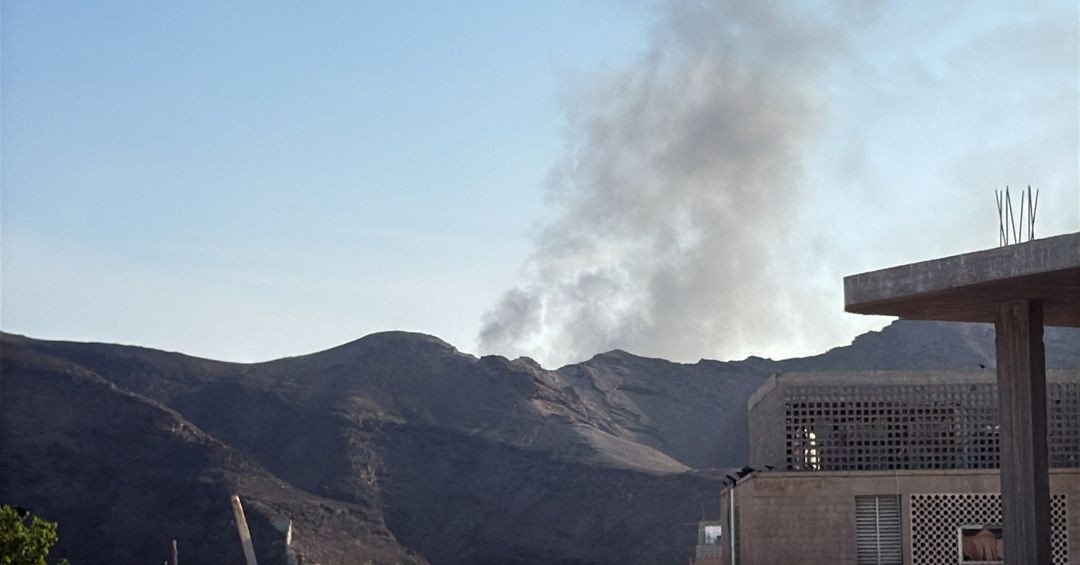
In Yemen, Saudi Arabia’s campaign against the Houthis suffered a major setback, as its allies, fighting on behalf of Yemen’s internationally recognized government, withdrew from the Bab al-Mandab Strait to defend their temporary capital, Aden, on the southern coast.
The announcement marked the apparent end of a six-week government counteroffensive to drive the Houthis from the mouth of the Red Sea and secure a key oil route.
Meanwhile, the Islamic Republic’s attacks on Bahrain, home to the US Fifth Fleet in the Persian Gulf, will likely put fresh pressure on US President Donald Trump to resolve a war he began nearly nine months ago.
Since the unpopular war helped his Republicans lose this month’s midterm elections, Trump has played down the need for a diplomatic breakthrough.
The main fighting between the United States and Iran has calmed from the initial phase of the conflict, but with diplomacy stalled, there is little immediate prospect of resolving either the wider conflict or the war in Yemen.
Houthi Gains
Sunday’s announcement of the Yemeni government’s withdrawal raises the prospect of new Houthi advances toward Aden on the southern coast; a base for the internationally recognized government since the Houthis drove it from the capital, Sanaa, more than a decade ago.
The Southern Armed Forces, the main military force fighting for Yemen’s government in the south of the country, said in a statement: “The Southern Armed Forces announce the implementation of a redeployment operation for its forces from Dhubab airport and the Bab al-Mandab area, west of Taiz province.”
“This step is based on the priority of securing the capital, Aden, and neighboring provinces, as well as strengthening the front lines and addressing existing threats,” the statement said.
There was no immediate response from the Houthis or Saudi Arabia.
The withdrawal marks a setback for efforts to reverse the Houthis’ rapid gains in September to seize the coast along the Red Sea and the Bab al-Mandab Strait, which controls access to it.
A Saudi-backed government offensive last month retook key positions around the strait but failed to push the Houthis fully out of the area or to retake the city of Mokha further up the coast.
The Houthis have responded by escalating drone and missile attacks on Saudi Arabia, grounding flights with attacks on its main airports, and, by targeting energy facilities, have also pushed global oil markets to the edge.
On Sunday, the militant group said it had attacked King Khalid International Airport and a financial center in Riyadh and two pumping stations on the East-West oil pipeline.
There was no immediate Saudi confirmation.
With the Middle East conflict disrupting oil flows through the Strait of Hormuz, Riyadh has diverted about 4 million barrels per day of crude oil through the East-West pipeline to Yanbu, equivalent to about 4 percent of global supply.
Yemeni military sources said government forces around Bab al-Mandab had deployed to Al-Suqayya, 150 kilometers (95 miles) west of Aden, though they were still trying to keep the Houthis away from nearby coastal areas.
In the highlands north of Aden, where the Houthis have besieged Yemen’s third-largest city, Taiz, the fighters are now deployed just outside the Tur al-Baha area, about 80 kilometers (50 miles) from the city, the sources said.
Humanitarian conditions are worsening in Taiz, which hosts about half of the 300,000 people displaced across Yemen by the recent fighting. Aid supplies cannot get in and civilians cannot get out.
Islamic Republic Attacks on Bahrain
The Islamic Republic’s fresh attacks on Bahrain, home to US bases, could undermine Trump’s desire to turn the page on the war after his Republicans’ heavy defeat in the midterm elections.
Reuters reported on Saturday that Trump has said in recent days he may refrain from attacking Iran if the United States faces no new provocations from either Tehran or the Houthis in Yemen, though he will maintain the US naval blockade on Iran.
Bahrain said it had intercepted and destroyed several Islamic Republic air attacks; the first such interceptions by its air defenses since September.
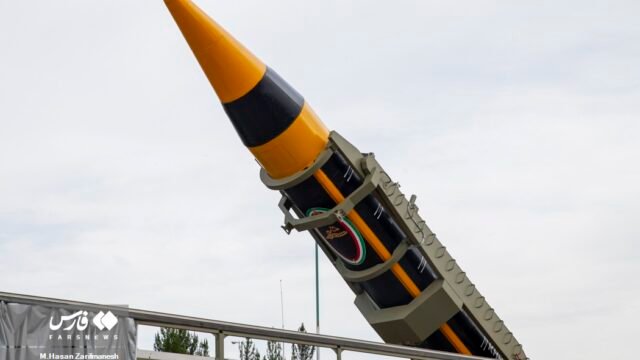
Fars News Agency reported that the Islamic Revolutionary Guard Corps said it had attacked a US military base in Bahrain with six drones in retaliation for “hostile US actions.”
During a brief alert, Bahrain asked citizens and residents to remain calm and go to the nearest safe place.
Two days earlier, the Revolutionary Guard said it had attacked a US early-warning radar facility in Bahrain. The US military denied this and said it had intercepted two Islamic Republic drones with no damage.
Crude oil has flowed from the Persian Gulf in recent weeks at levels close to pre-war levels. But attacks on ships have become a daily risk, keeping markets nervous and prices still high.
The Revolutionary Guard said two oil tankers caught fire on Sunday after striking naval mines in the Strait of Hormuz. Reuters could not independently verify the report. The Guard does not usually acknowledge attacking ships in the strait but says transit through it without its permission is unsafe.
Islamic Republic state media reported that Abbas Araghchi, the Islamic Republic’s foreign minister, will visit Oman on Tuesday, which holds the southern shore of the Strait of Hormuz and has played a role as a mediator in the crisis, for talks with his counterpart.
Background: The Bab al-Mandab Strait, between Yemen and the Horn of Africa, is one of the world’s strategic shipping chokepoints, linking the Red Sea to the Gulf of Aden and the Indian Ocean, and the main route for ships traveling from Asia to Europe via the Suez Canal passes through it. Control of, or a threat to, this strait gives any force leverage over global trade and energy, and for that reason Yemen’s coast has for years been an arena of competition among regional powers.
Analysis: The retreat from Bab el-Mandeb and the drones over Bahrain on the same day are one picture, not two stories: the Islamic Republic’s proxy network is pressing at both of the world’s great energy chokepoints while the regime itself sits under naval blockade. One figure in the report, though, shows the underlying direction. Saudi Arabia is routing some 4 million barrels a day around the strait through its East-West pipeline, the region has spent years building workarounds that dull Tehran’s energy leverage. Falling back on Aden is a local setback for the anti-Houthi forces; strategically, it is the regime’s proxies who are fighting to hold ground while the regime’s own ports remain blockaded.