The Trump administration, in a dramatic escalation of its campaign to crack down on leaks, has directed the U.S. Army to examine the possibility of bringing a criminal case against a senior general whom the Pentagon’s political leadership has accused of giving sensitive information to reporters, according to people familiar with the matter.
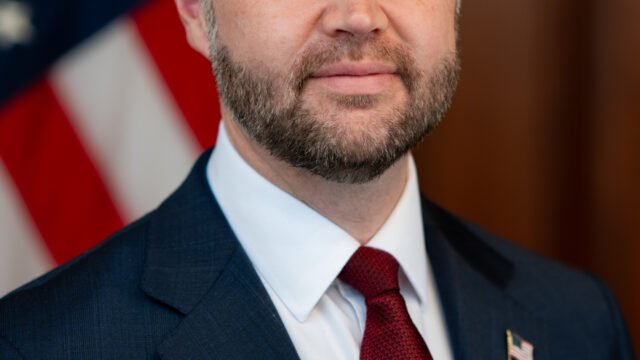
The development, which has not been previously reported, means that Lt. Gen. Brett Sylvia now faces legal risk on two fronts, after allegations raised by Defense Secretary Pete Hegseth’s team at the Pentagon had already been referred to the Justice Department.
A U.S. official, who, like some others, spoke on condition of anonymity to discuss the Defense Department’s growing case against Sylvia, confirmed that the matter has been assigned to Adam Tell, the acting secretary of the Army, for “appropriate handling.”
Attempts to reach Sylvia were unsuccessful, and he has not spoken publicly about the allegations. To date, neither the Army nor federal law enforcement agencies have accused Sylvia of a crime. Sylvia, 54, until his firing last month, reported as chief of programs and policy of the Joint Staff to Gen. Dan Caine, chairman of the Joint Chiefs of Staff. A Joint Staff spokesman declined to comment.
The aggressive pursuit of a criminal case against such a senior military official follows Hegseth’s longstanding vow to find and punish those who have spoken to news media about his management of the Pentagon, especially amid the Iran war. It is part of a broad effort by the Trump administration to target suspected leakers; a campaign that at the Defense Department has included extensive use of polygraphs and nondisclosure agreements.
Sean Parnell, Hegseth’s senior spokesman, wrote on social media on October 29, after news of Sylvia’s firing was reported: “Our commitment was not an empty promise. We swore we would find you, and we meant it.”
The Justice Department has not confirmed whether federal officials are examining the Pentagon’s claims or not. In a short statement, the organization said only that it has “ongoing investigations related to possible leaks of classified information” and works closely with “our government partners,” including the Defense Department. A spokesman declined to address questions about the Sylvia case specifically.
Hegseth’s office, in response to a request for comment, referred to Parnell’s statement last month. A spokesman for the secretary of the Army referred questions to Hegseth’s office.
It is unclear whether the Justice Department or the Defense Department could obtain a conviction. Hegseth’s team’s earlier effort to punish suspected leakers went nowhere after the case was referred to federal law enforcement agencies.
Veterans of the military justice system said any prosecution of Sylvia in that arena will face significant legal and logistical obstacles, not least of them Hegseth’s team’s involvement in pushing for disciplinary action against the general. These people said the process is designed to be free from intervention by senior officials in a service member’s chain of command.
Ultimately, the point of the Sylvia case may not be to obtain a conviction, but to send a message, according to Franklin Rosenblatt, a retired Army officer, lawyer and associate professor at Mississippi College School of Law. “In many of the recent national security controversies in the second Trump administration, the process itself is the punishment, and cases are brought without a realistic view of whether the government can take them to court and obtain a conviction,” he said.
Parnell’s social media post on October 29 strongly suggested that the general had endangered U.S. service members through the “deliberate and unauthorized disclosure of classified information.” Parnell said an internal investigation had been “extensive.”
But exactly what Sylvia is accused of doing has not been stated publicly in detail by the administration — only in media reports that have relied on what appear to be selective leaks authorized by the Pentagon.
For example, in the hours after news of Sylvia’s firing broke, a number of conservative reporters shared a statement attributed to an unnamed “Department of War official,” the name the Trump administration uses for the Defense Department. That statement claimed that “Sylvia is the subject of an investigation for leaking classified information about the Iran war, the war between Russia and Ukraine, and more,” and accused him of “meeting with reporters outside the Pentagon” to circumvent restrictions Hegseth’s team had imposed to limit reporters’ access to the building.
The U.S. official who confirmed that Hegseth had assigned Sylvia’s case to the secretary of the Army claimed that the general had acknowledged to military investigators that he had taken notes from classified government material marked secret and had given information from it to a reporter. The official claimed Sylvia also told investigators that he had communicated with a reporter through the commercial messaging app Signal but had deleted the conversation.
Others familiar with the case have said Sylvia failed several polygraph tests during the Pentagon’s search for possible leakers, and has told colleagues that he acknowledged having relationships with reporters but denied disclosing classified information to them.
Axios, citing an internal military report it had reviewed, reported on October 29 that the general had acknowledged leaking information to reporters from two news outlets.
The Washington Post has not independently confirmed those claims, and the Pentagon, when asked, declined to share a copy of its internal investigation.
People familiar with the matter said it is by no means certain that the administration can build a case strong enough to prosecute Sylvia. For example, it is unclear whether the general, if he passed information to a reporter, may have generalized the material to avoid disclosing classified information, as senior military officers routinely do when speaking at press briefings. In addition, these people said deleting a Signal conversation, if it occurred, does not by itself prove anything.
If the case proceeds at the Defense Department, it could put extraordinary pressure on the military justice system; a system that rarely tries generals for alleged crimes and even more rarely has a serving defense secretary and his political team so directly involved in pushing for the charges.
When a general is appointed to oversee a case, he is expected to act fairly and impartially. If the general decides to move a case forward, an Article 32 hearing is an important initial step in deciding whether there is a basis for a trial, known as a court-martial. Such hearings are usually open to the public, with minor exceptions if there is a need to discuss classified information, according to Eugene R. Fidell, a visiting lecturer at Yale Law School with decades of experience in the military justice system.
A jury of eight of Sylvia’s peers will likely determine his fate if the case is then sent to a court-martial, Fidell said. Under the regulations, jury members must be senior to the accused — meaning four-star generals, three-star generals with more time in that rank than Sylvia, or retired generals with equivalent experience. They can be from the Army or any other branch of the armed forces.
Rosenblatt, the Mississippi College law professor, said that in addition to possible charges focused on the alleged release of classified information, the military justice system includes a “vast arsenal of possible charges.” That includes failure to obey a lawful order or regulation, conduct unbecoming an officer and contemptuous words against senior civilian officials, he added.
If charges are brought, Sylvia’s defense team will “almost certainly” raise unlawful command influence, Rosenblatt said. Unlawful command influence, known as the “mortal enemy of military justice,” occurs when a superior seeks a particular outcome by pressuring personnel who are ultimately subordinate to him.
A statement by an unnamed “Department of War official” that was selectively released after Sylvia’s firing claimed that the general had been removed for “severe misconduct” and had failed three polygraph tests. That statement said “the extent of his leaking became so critical” that Hegseth was forced to remove him. It said: “Immediate action was necessary and could not wait another second.”
Rosenblatt said the emphasis on polygraphs is “problematic,” because the results are not admissible in court. A judge could determine that the Defense Department’s public claims about Sylvia’s polygraph results could taint a pool of potential jury members, he added.
“The jury is charged with determining who is credible and who is lying, not machines,” Rosenblatt said.
Background: Criminal cases involving U.S. service members are handled under the “Uniform Code of Military Justice” and in military courts, not in civilian courts. In this system, “unlawful command influence” — that is, pressure by senior officials on the proceedings — is considered one of the most serious violations and can by itself discredit a case; an issue that is at the heart of the legal dispute in Sylvia’s case.