USS Spruance (USS Spruance) returned to its homeport in San Diego on Friday, after just under a year at sea, during an extended deployment in which it carried out some of the first strikes of Operation Epic Fury.
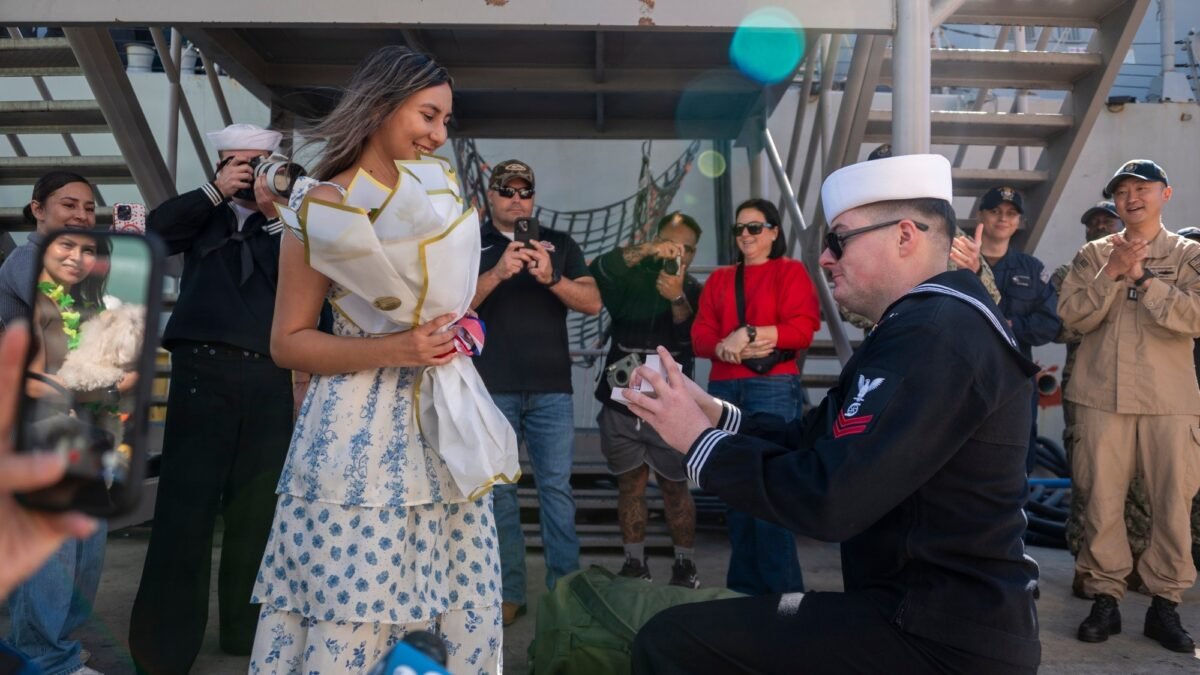
The Arleigh Burke-class (Arleigh Burke) guided-missile destroyer returned amid cheers from a crowd of family members at Naval Base San Diego, ending a voyage that had begun on November 21, 2025, as part of the USS Abraham Lincoln Carrier Strike Group (USS Abraham Lincoln Carrier Strike Group). The deployment was extended beyond its planned seven months at sea, because the destroyer continued to support operations against Iran even after the flagship carrier Lincoln left the Middle East in August.
The ship’s commanding officer, Navy Cmdr. Lee R. Tate, called leading the ship on the long deployment “the honor of a lifetime.”
“Spruance’s sailors made a difference. They represented their families, their ship and the United States Navy with pride,” Tate said in a statement on Friday.
Spruance’s 357-day voyage surpassed the record of the destroyer USS McFaul (USS McFaul) — 333 days, set just last month — making it the longest deployment by a Navy ship since World War II. According to the Navy, the deployment covered some 88,000 nautical miles in the northern and southern Pacific in support of operations by the U.S. Navy’s Third and Seventh Fleets, before the ship spent months in the U.S. Fifth Fleet’s operating area supporting the mission against Iran.
Helicopter Maritime Strike Squadron 71, which served aboard Spruance throughout the deployment, also returned to San Diego on Friday. According to the Navy, the helicopter unit flew about 1,150 hours in 190 sorties during the combat deployment.
Spruance’s sailors fired some of the first Tomahawk missiles toward Iran on February 28, as the United States and Israel began Operation Epic Fury. The destroyer fired dozens of missiles, while combat operations continued for months and it faced a “constant threat” from drones and missiles of the Islamic Republic.
Navy officials said on Friday that Spruance was credited with shooting down 12 enemy drones and four anti-ship cruise missiles during combat operations.
Spruance later became part of the U.S. naval force blockading commercial ships from Iranian ports. In April, Spruance intercepted the Iranian-flagged cargo ship Touska after it ignored repeated U.S. warnings for six hours.
U.S. Central Command, which runs combat operations in the Middle East, said at the time that Spruance ordered the engine room evacuated and then fired several rounds at the ship.
Spruance and its sailors received the Presidential Unit Citation for their efforts against Iran. The Presidential Unit Citation is the highest U.S. military honor for units that display “extraordinary heroism, gallantry, determination and esprit de corps” in armed conflict. Spruance’s sailors also received the Combat Action Ribbon.
Spruance’s return came just one day after USS Michael Murphy (USS Michael Murphy) returned on Thursday, after 11 months at sea, to its homeport at Joint Base Pearl Harbor-Hickam in Hawaii. Michael Murphy also supported Operation Epic Fury with dozens of Tomahawk strikes and took part in the blockade operation. That ship also received the Presidential Unit Citation, and its sailors received Combat Action Ribbons.
Background: USS Spruance (USS Spruance) is an Arleigh Burke-class guided-missile destroyer; the most numerous class of destroyers in the U.S. Navy, forming the backbone of the country’s surface fleet. These destroyers are equipped with the Aegis combat system and vertical launchers, and their main missions are air and missile defense, anti-submarine warfare and strikes on land targets with cruise missiles.
Analysis: Spruance’s record reads like a document, not a press release: 357 days at sea, some of the first shots of the campaign against the Islamic Republic, and 12 drones and four anti-ship cruise missiles destroyed. Deterrence is not built on paper; it is built on records like this. Tehran now knows the Aegis screen has been tested in a real, sustained fight and held — knowledge that raises the price of every future salvo it plans. The deployment proves something else as well: a destroyer that stays on the line for nearly a year and comes home has shown friend and foe alike that the American presence in the Persian Gulf is not a passing gesture.