A year ago, Liu Jun was a tenured professor at Harvard University and a newly elected member of the National Academy of Sciences, America’s most distinguished scholarly society.
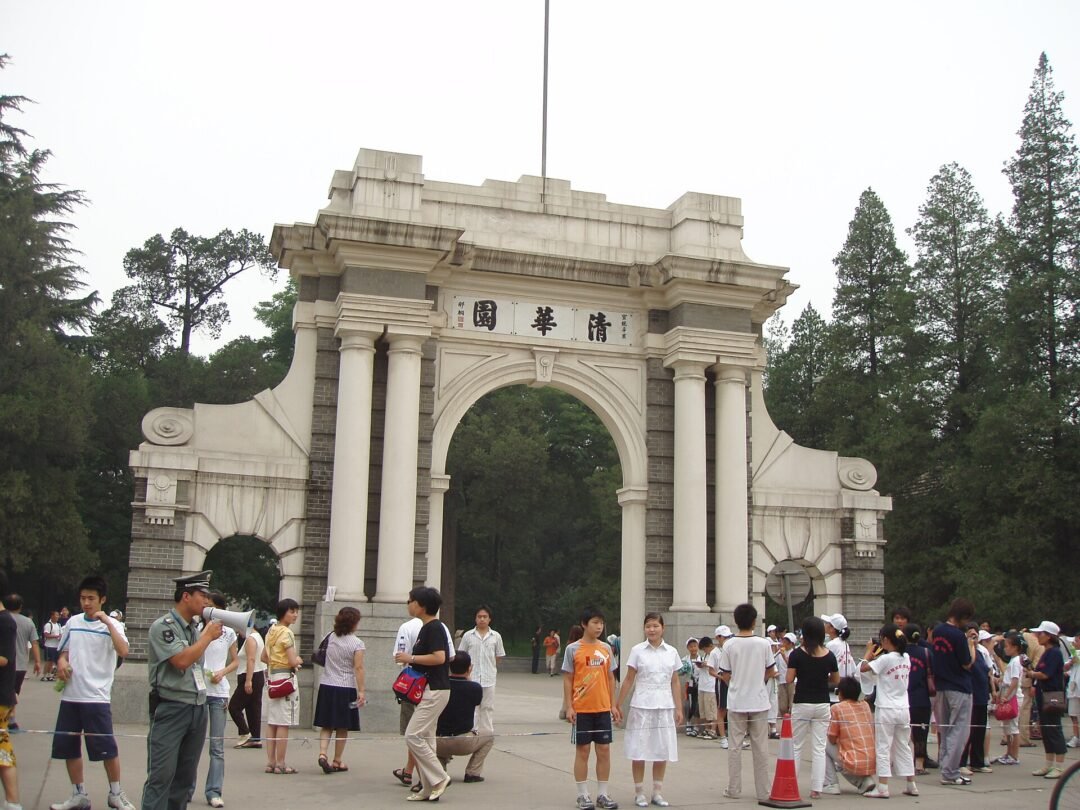
Today, he lives in Beijing, where he chairs a newly formed statistics department at Tsinghua University, the alma mater of Chinese leader Xi Jinping. His work is pushing frontiers in a discipline vital to artificial intelligence and cancer research. And he’s looking to bring back more people just like him: born in China, educated in America’s finest institutions and eager to return home.
“For recruiting, naturally we think about Chinese first,” says Liu, a 61-year-old American citizen, in an interview in his Tsinghua office, just a short stroll from where he was born.
Among his targets: math and science whizzes who rose to prominence in the U.S. but want to be closer to their aging parents, or the cutting edge of China’s increasingly formidable tech sector.
For decades, China’s best and brightest beat a path to the U.S., where they had more freedom to pursue their dreams. Their research contributed significantly to America’s lead in science and technology.
But now, more are deciding China offers a good, or better, future. Going back, they are taking what they learned in U.S. schools and startups with them, helping advance the aspirations of America’s main geopolitical rival.
Dozens of high-profile Chinese scholars have left the U.S. in recent years, including multiple Harvard professors and others who held major posts at Yale, UCLA and the University of Chicago.
They follow on the heels of lesser-known Chinese nationals who studied and worked in the U.S. before returning home to launch projects crucial to China’s tech ambitions.
Between 2022 and 2026, 668 tenured or tenure-track scientists of Chinese descent relinquished their affiliations with U.S. institutions for other countries including China, according to preliminary data from researchers at Princeton and Harvard.
Many returnees say they are going home for personal, not political, reasons.
Beijing has offered financial incentives, prestigious titles and resources to do whatever research some scholars want to do.
In the U.S., by contrast, many Chinese scholars and engineers report feeling increasingly unwelcome. The first Trump administration’s Justice Department began probing scholars’ academic links to China, while immigration officials tightened up rules making it harder for Chinese nationals to remain in the U.S. More recently, federal funding for some academic programs has been curtailed.
The U.S. still retains many advantages, including a constellation of top universities, the most Nobel laureates by a large margin and deeper capital markets for those who want to turn their ideas into companies.
The National Science Foundation last year found 83% of Chinese science and engineering Ph.D. alumni in the U.S. were still in the country five years after graduation. Roughly 22,000 tenured professors of Chinese descent are working in science, technology, engineering or mathematics in the U.S., according to preliminary estimates by Junming Huang, a Princeton research scientist.
But China’s decadeslong boom has enabled Beijing to better fund its universities and bankroll more innovative research, making it less of a leap for scholars to return home. U.S. News & World Report now ranks five Chinese universities among the world’s top 50, including Tsinghua, which at No. 6 is listed ahead of Yale, Columbia and Princeton.
“Many have left, but many more are considering leaving and even more are deciding not to come in the first place,” says Margaret Lewis, a law professor at Seton Hall University who studies U.S.-China ties. “Adding these dynamics to the Trump administration’s disruptions to scientific research is a fierce blow to the United States’ competitiveness.”
Liu, the former Harvard mathematician, was born in 1965 on the campus of Tsinghua, which was founded in 1911 to prepare Chinese students for American universities. He spent his undergraduate years studying mathematics at Peking University, came to the U.S. on a state-sponsored visa in 1985, finished his Ph.D. in statistics at the University of Chicago and landed a tenured position at Harvard in 2000.
Along the way, Liu became a U.S. citizen, a husband and a father, as well as one of America’s most decorated mathematicians. His research included groundbreaking work on machine learning and earned him a Presidents’ Award from the Committee of Presidents of Statistical Societies, considered by many to be the highest honor in statistics.
Around 2014, Tsinghua’s then-president visited Liu in Boston in hopes of luring him to Beijing full-time. Liu was tempted, but decided it was better to stay in the U.S. for the sake of his children. After Tsinghua flew Liu and his family to Beijing following his father’s death in 2023, he decided the time was right, with his mother now a widow and his two oldest children in college in the U.S.
Tsinghua had upped an earlier offer, making Liu the inaugural chair of its newly established department of statistics and data science. He made his decision shortly before Trump won re-election in 2024. Still, he says Trump’s return to office made his decision feel like the right one.
Since his move to Tsinghua, he has had to call off joint research projects with Harvard colleagues. “If my colleagues at Harvard have me as their co-author, it could be a problem. It’s kind of stupid,” Liu says. “This kind of research, it used to be very open. Even China in its darkest time wasn’t like that.”
Now in China, Liu says his American citizenship makes him exempt from Communist Party meetings that his fellow faculty members must attend, and that he is free of any political pressure.
Projects Liu is overseeing include one that uses Crispr gene-editing technology to better understand cancer tissues. He says he is impressed with Beijing’s commitment to promoting AI, and the role statisticians can play in its development.
His ties to the U.S. remain strong: His eldest son is a doctoral candidate at Stanford, and his family still owns a home in Massachusetts, where he remains an emeritus professor at Harvard.
Yet he’s eager to entice more top talent to China. The thousands of tenured professors of Chinese descent in STEM fields in the U.S. make it a rich field for recruitment.
“If you understand how generally educated the U.S. is, they were 100 years ahead, almost, and now it’s almost 20 years ahead,” Liu says. “China is catching up.”
As for the political situation, Liu says he is saddened to see the widening divide between the U.S. and China, though he is hopeful it’s a passing storm.
“I think it will be better. I think it’s just temporary,” Liu says. “Maybe I’m just doing wishful thinking.”
Background: Tsinghua University is China’s most prestigious technical university and the alma mater of Xi Jinping; for years Beijing has run talent-recruitment programs offering pay, titles and research budgets to lure Chinese-born scientists working in the West back home. Statistics and data science are core infrastructure for artificial intelligence, which is why competition over this talent is part of the U.S.-China strategic rivalry.
Analysis: Beijing is winning the talent war with the same patience it brings to the chip war: America’s open universities train world-class researchers for it, and those researchers then go home carrying American knowledge to work on AI and dual-use technologies. Every departing professor is not just an empty chair; it is a direct transfer of intellectual capital to the main rival. If Washington wants to keep its scientific lead, it must do two things at once: shut the door on scientific espionage, and keep America the most desirable destination for the world’s best minds.