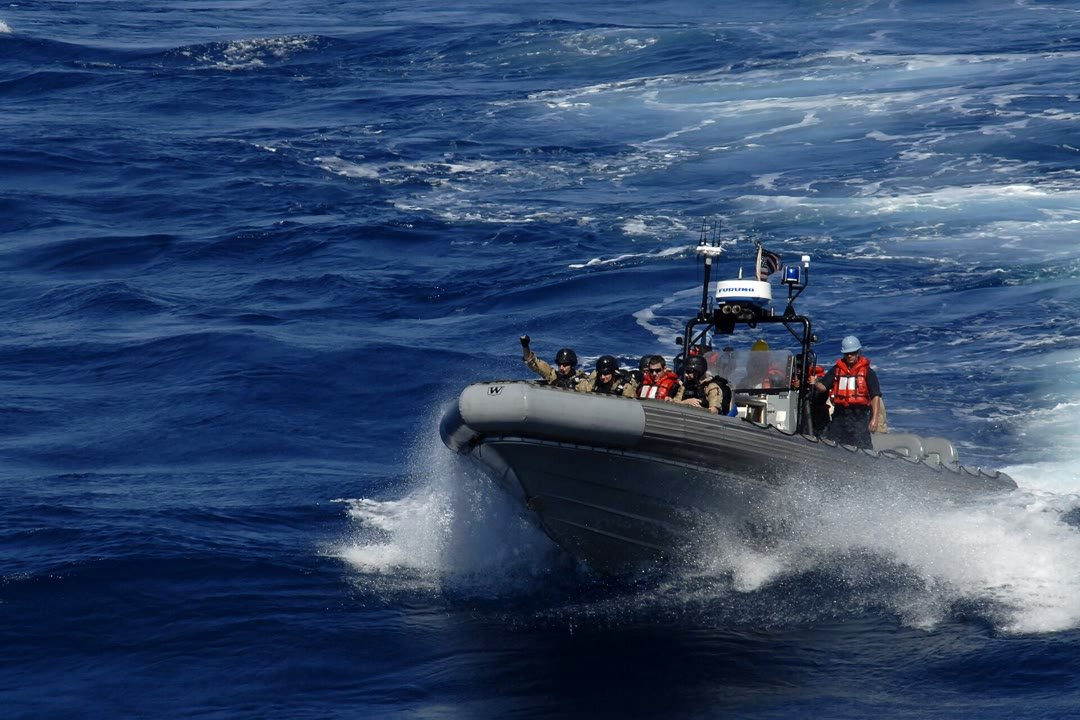
US Central Command (CENTCOM) on Saturday released a video of its warships and military facilities in the region and announced that the US naval blockade of the Islamic Republic has entered its 130th consecutive day.
CENTCOM said US forces conducting the blockade are preventing the Islamic Revolutionary Guard Corps from exporting crude oil worth billions of dollars. Oil exports are the main artery financing the regime’s war machine and its proxy network across the region, and the naval blockade is aimed directly at that artery.
US Central Command also stressed the focus, resolve and professional performance of American forces carrying out the mission. The announcement comes as the Strait of Hormuz remains the central arena of the naval confrontation between the United States and its allies and the Islamic Republic, with attacks on commercial shipping in the waterway reaching their highest level in recent weeks since the war began.
Background: The naval blockade of the Islamic Republic’s ports is part of Washington’s strategy of maximum military and economic pressure to cut off the regime’s oil revenue. It is being enforced alongside a large US naval presence in the Persian Gulf and the Sea of Oman, and Washington has repeatedly said it will continue until Tehran abandons its aggressive conduct.
Analysis: The blockade reaching day 130 shows that US pressure on the regime is not a one-off measure but a sustained, deliberate siege aimed at the Revolutionary Guards’ financial backbone. The Islamic Republic, the central threat to regional security, is trying to raise the cost of the blockade by attacking shipping in the Strait of Hormuz, but the result has been the opposite: the US and Israeli military posture has been reinforced, the regime’s oil exports are under growing pressure, and the Strait of Hormuz remains the main pressure point on Tehran.