A third U.S. aircraft carrier and its escorts are now in the Middle East.
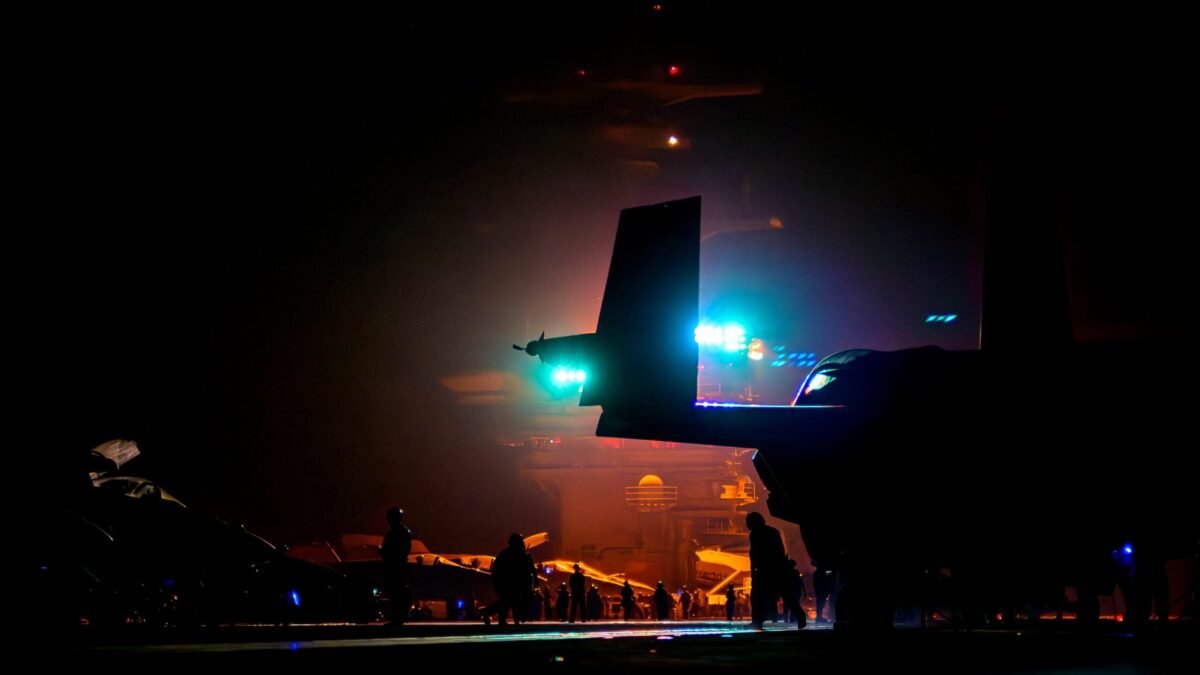
USS Theodore Roosevelt (CVN-71) chopped into U.S. 5th Fleet on Sunday. The arrival of the Theodore Roosevelt Carrier Strike Group makes three U.S. carrier strike groups in the Middle East, as tensions persist between the U.S. and Iran.
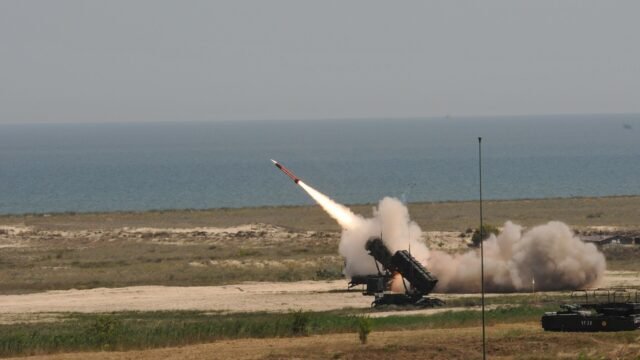
Over the weekend, the Houthis continue to make claims over areas around the Bab el-Mandeb — the strategic chokepoint that connects to the Red Sea — while Iranian forces claim it attacked a U.S. radar in Bahrain on Friday. U.S. Central Command denied the claim posting on social media site X that the Islamic Revolutionary Guards Corps launched two one-way drones at Bahrain, which were shot down.
Theodore Roosevelt is expected to relieve USS George Washington (CVN-73), which arrived in the Middle East toward the end of August. While GW ultimately relieved USS Abraham Lincoln (CVN-72), the two carriers both operated in the Middle East, along with USS George H.W. Bush (CVN-77), for about a month before Abe headed home.
It is unclear how long GW will stay in the area with TR’s arrival. Bush, GW and TR’s presence in the Middle East comes at the cost of the U.S. carrier presence in the Indo-Pacific region.
While Abe headed home after 321 days on deployment, two of its escorts — USS Michael Murphy (DDG-112) and USS Spruance (DDG-111) — stayed behind. Michael Murphy returned home Thursday after 346 days deployed, while Spruance returned home on Saturday after 357 days deployed. Spruance’s deployment came in at 36 days more than Abe and set a record for destroyer deployments.
Nearly year-long deployments are rare for destroyers, which usually go out for six to seven months. However, the Navy has warned sailors and families to expect deployments that approach a year as the sea service attempts to keep up the needs of the administration.
Spruance deployed on Nov. 21, 2025, from Naval Base San Diego, Calif. The destroyer operated in the 3rd, 5th and 7th fleets, traveling more than 88,000 nautical miles throughout its deployments, according to a Navy release announcing the destroyer’s return.
While deployed, Spruance was part of Operation Epic Fury, during which the destroyer disabled cargo vessel M/V Touska as part of the ongoing maritime blockade. While the release said the ship launched Tomahawk missiles, it did not go into details about the Iranian military targets. The destroyer did take out 12 drones and four anti-ship cruise missiles while in the Middle East, according to the Navy release.
The “Raptors” of HSM-71 embarked on Spruance and flew 190 sorties during the deployment, reads the release.
Spruance received the Presidential Unit Citation and Combat Action Ribbon following its role in Operation Epic Fury.
The destroyer has been busy over the past two years. Before its most recent deployment, the ship was part of U.S. Northern Command’s southern border operations, leaving San Diego in March 2025. Prior to that, Spruance spent five months in the Middle East as part of the U.S. response to Houthi attacks on commercial shipping, coming home on Dec. 19, 2024.
Background: A carrier strike group typically consists of a nuclear-powered aircraft carrier, a cruiser and two guided-missile destroyers, an attack submarine and support ships, with an air wing of about 70 aircraft. U.S. 5th Fleet, headquartered in Bahrain, is responsible for naval operations in the Persian Gulf, the Strait of Hormuz, the Gulf of Oman and parts of the Red Sea.
Analysis: Three strike groups in the Middle East mean Washington is doing three things at once: holding the naval blockade of the regime, defending its bases against IRGC drones, and keeping the option of renewed strikes alive at every moment. The price of that concentration is a thinner carrier presence in the Indo-Pacific and worn ships and crews — Spruance’s 357-day deployment is the documentary evidence of that strain. But the strategic message is clear: as long as Tehran plays in Hormuz and Bahrain, the United States will not only stay in the region; it will come back heavier.