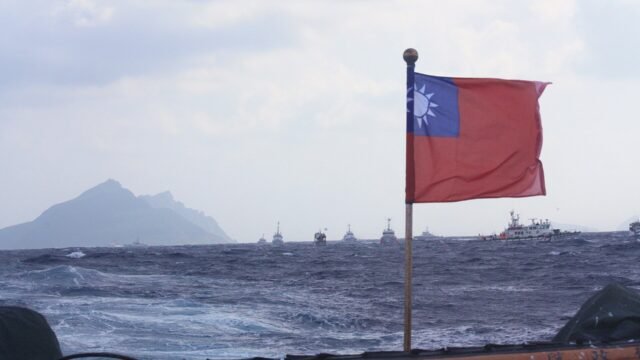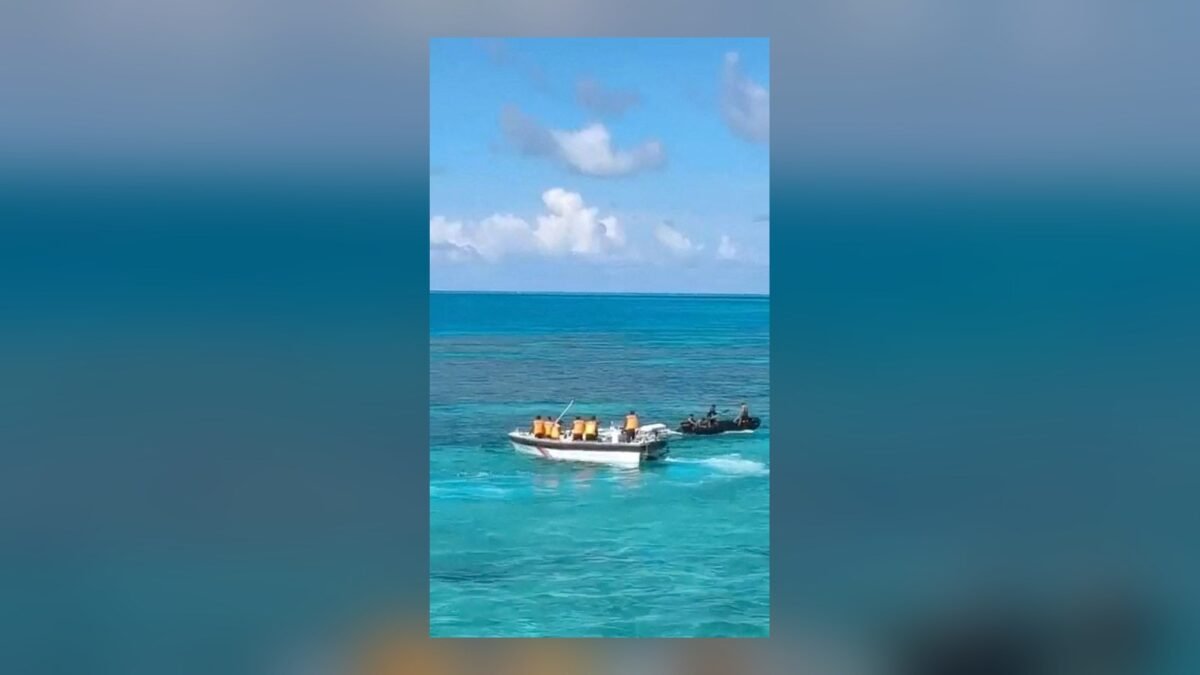
Relations between Manila and Beijing have soured under Philippine President Ferdinand Marcos Jr.; Manila has turned back toward the United States, which backs the Southeast Asian country in its maritime disputes with China.
Below is a timeline of key events over the past two years that have escalated tensions between the Philippines and China:
2025
January 6 – The Philippines deploys ships and aircraft to monitor China’s largest coast guard vessel in its exclusive economic zone.
February 18 – Manila accuses China’s navy of a dangerous flight near Scarborough Shoal; Beijing disputes the account.
March 28 – Satellite imagery shows China deploying two H-6 bombers around Scarborough Shoal.
May 5 – The Philippines challenges a Chinese research vessel over what it calls an illegal maritime survey off the coast of Ilocos.
August 4 – The Philippine and Indian navies sail together in the South China Sea for the first time.
August 12 – Manila criticizes China’s “dangerous maneuvers” at Scarborough Shoal; it says they led to a collision involving a Chinese vessel.
August 13 – China says it drove away a U.S. destroyer that sailed near Scarborough Shoal; the U.S. Navy says its action was in accordance with international law.
September 10 – China approves the creation of a national nature reserve at Scarborough Shoal.
September 16 – China’s coast guard fires water cannon at Philippine vessels near Scarborough Shoal; the Philippines accuses Beijing of an “aggressive” action that wounded one person.
October 12 – Manila accuses China’s coast guard of ramming and firing water cannon at Philippine fisheries vessels near the Philippine-occupied island of Thitu.
2026
January 20 – China says it drove away Philippine aircraft that had “illegally entered” the airspace above Scarborough Shoal.
January 27 – The Philippine and U.S. militaries hold joint military exercises near Scarborough Shoal.
February 27 – The Philippines joins naval exercises with U.S. and Japanese allies in the South China Sea; China also holds similar exercises in the disputed sea.
March 4 – The Philippines arrests Filipino nationals suspected of spying for China.
March 18 – China expels two Philippine aircraft above Scarborough Shoal.
March 20 – The Philippines accuses a Chinese navy vessel of directing its fire-control radar at one of its vessels.
March 29 – China holds naval, air and coast guard patrols around Scarborough Shoal, after Beijing and Manila resumed talks on energy cooperation.
April 9 – The Philippine coast guard accuses Chinese forces of firing flares directly at its aircraft in the South China Sea.
April 25 – China holds live-fire exercises in waters near Luzon Island, while Manila and Washington hold war games.
April 27 – The Philippines and the United States hold exercises in Palawan province near the South China Sea.
May 2 – The United States and the Philippines deploy an anti-ship missile system in a province near Taiwan for war games.
May 7 – The Philippines says a Chinese vessel conducted “illegal” research near the gas-rich Reed Bank in the South China Sea.
June 9 – The Philippines takes diplomatic action against China over a floating structure in the South China Sea.
June 11 – China announces sanctions against Gilberto Teodoro, the Philippine defense minister, and says he has “repeatedly made false statements about China.”
July 20 – The Philippines says Chinese coast guard personnel struck a Philippine navy sailor on the head with a wooden baton during a confrontation in the South China Sea.
July 23 – Manila says a Chinese coast guard vessel fired water cannon at a Philippine government fisheries vessel at Scarborough Shoal in the South China Sea.
September 18 – The Philippines says China’s coast guard rammed a Philippine boat on a refueling mission.
September 25 – The Philippines accuses China of blocking a resupply mission to troops at Second Thomas Shoal.
October 16 – The Philippines rebukes China’s ambassador over his “thinly veiled threat” of force.
October 19 – The Philippines says it summoned China’s ambassador in Manila over remarks that conveyed a “threat.”
Background: The Philippines has had a mutual defense treaty with the United States since 1951, and Washington has repeatedly stressed that an armed attack on Philippine forces in the South China Sea would trigger the treaty’s obligations. Scarborough Shoal, which China has effectively controlled since 2012, is one of the most sensitive flashpoints in the dispute because of its proximity to the main island of Luzon and to rich fishing waters.
Analysis: Read the two-year timeline as a single pattern and the method shows itself: water cannon, collisions, fire-control radar, a sailor beaten with batons — each incident one rung above the last, all of them below the threshold of open war. Beijing is slicing the status quo in its own favor and raising the price of response for Manila and Washington a little at a time. The pressure carries an unintended product, however: every new incident welds the Philippines tighter to its American alliance, building precisely the coalition the pressure was meant to forestall. Scarborough, sitting that close to Luzon, is where the method will be tested hardest, because any change in its status pulls the 1951 Mutual Defense Treaty directly into play.