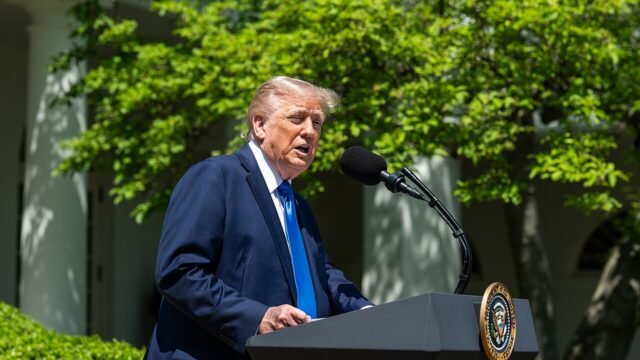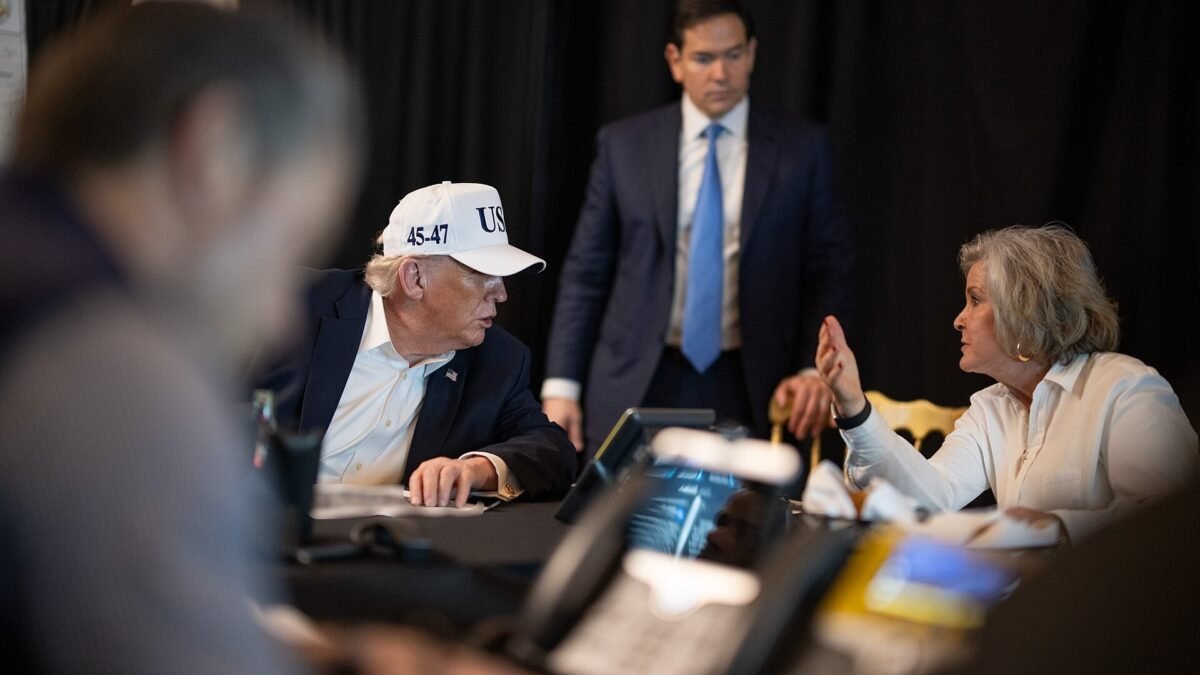
Donald Trump will meet next week with the leaders of China and Russia to discuss possible reductions in the three countries’ nuclear arsenals; the White House confirmed the matter on Friday.
A senior administration official who briefed reporters on the planned meeting said Trump, Chinese President Xi Jinping, and Russian President Vladimir Putin would discuss reducing nuclear stockpiles.
It will be the first time that the three leaders of the countries with the world’s largest stockpiles of nuclear weapons meet to discuss nonproliferation issues.
“This hopefully will be the beginning of a conversation that can be productive going forward,” the official said, warning that the US does not expect any reduction agreement from the talks.
Reporters agreed to grant the official anonymity as a condition of attending the briefing.
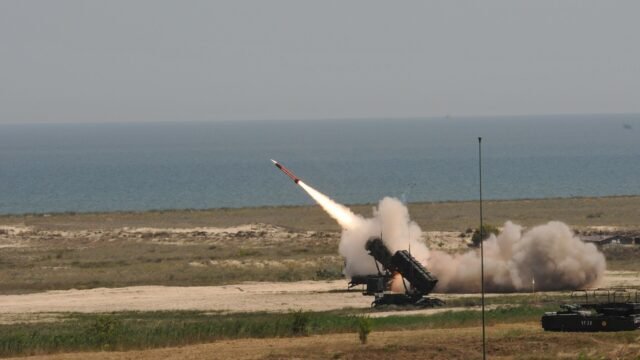
At present, there is no legal control over the size of the three countries’ strategic weapons stockpiles. The treaty that limited the size of Russia’s and the US’s nuclear arsenals expired in February. China has resisted calls to enter nonproliferation negotiations on the basis that its nuclear forces are far smaller than those of the US and Russia.
China’s role as host of the meeting is notable given the sharp increase in the size of its nuclear weapons arsenal over the past decade. The Pentagon said in a 2024 report that China has about 600 nuclear weapons and is on track to increase that stockpile to about 1,000 warheads by 2030. Russia and the US each have about 5,000 nuclear weapons.
The US has concerns about the expansion and secrecy of China’s nuclear forces.
“What China is doing in a very nontransparent way with its nuclear arsenals is something that affects the security of every human being in the world,” the official said, without providing further details.
The trilateral meeting will also include talks on the war in Iran. But Russia’s war against Ukraine is not on the agenda.
“The president has said he does not intend to talk about Ukraine at that meeting,” the official said, because talks related to the Ukraine conflict are on a separate track that does not include China.
The meeting, which the Trump administration has announced for weeks, has been controversial in part because there are concerns that Trump could use it to discuss the future of Ukraine with its invader and with China, which has supported Russia’s war effort.
The meeting will also provide a historic opportunity for a joint photo between the US and the leaders of the world’s two major authoritarian countries — countries whose interests are often in direct conflict with US interests.
“The optics of this are terrible,” said Ian Brzezinski, deputy assistant secretary of defense for European and NATO policy from 2001 to 2005 and now a fellow at the Atlantic Council.
“The idea that they’re going to sit down with Trump and try to solve problems without the active participation of our allies and partners — and basically prioritize them over our allies and partners — is going to be very concerning to our allies in Europe, the Indo-Pacific and elsewhere,” he said.
Background: The New START treaty was the last binding agreement between the US and Russia to limit the two countries’ strategic nuclear weapons, and with its expiration, for the first time in decades there is no legal ceiling on the strategic arsenals of the world’s two major nuclear powers. China has never been a party to such treaties and has always refused to join arms control negotiations on the argument that its arsenal is much smaller.
Analysis: The meeting matters more than its agenda. It is the first conversation among the world’s three great nuclear powers in the vacuum left by New START, and Beijing’s seat at the table marks the formal end of the bilateral era: Washington now treats China’s growing arsenal, not Russia’s legacy stockpile, as the pacing problem of the coming century. That the Iran war is on the agenda while Ukraine is not sends Tehran a cold message. The Islamic Republic’s fate is being discussed in rooms where it has no seat — by patrons in Moscow and Beijing who will, in the end, bargain over their own interests with Washington, not over the regime’s survival.